Few discoveries in peptide science have generated as much excitement as MOTS-C. Unlike many peptides that originate from the nucleus of a cell, MOTS-C is one of a small group of mitochondrial-derived peptides (MDPs) encoded by mitochondrial DNA. This unique origin has sparked intense scientific interest because mitochondria play a central role in energy production, metabolism, cellular signaling, and healthy aging.
Since its discovery in 2015, MOTS-C has been investigated in laboratory and clinical research for its potential role in metabolic regulation, exercise physiology, insulin sensitivity, and mitochondrial communication. Although research is still evolving, its distinctive biology has made it one of the most closely watched investigational peptides.
This guide explores what MOTS-C is, how it works, what published studies have found, and why researchers continue to study this fascinating peptide.
Research Use Only: All products sold by Summit Pep Labs are intended exclusively for laboratory research and are not approved for human consumption or therapeutic use.
🔬 What Is MOTS-C?
MOTS-C (Mitochondrial Open Reading Frame of the 12S rRNA-c) is a 16-amino acid peptide encoded by mitochondrial DNA rather than nuclear DNA.
That distinction is significant. For decades, scientists believed mitochondria served primarily as the “powerhouses of the cell,” generating ATP through oxidative phosphorylation. More recent research has revealed that mitochondria also produce signaling molecules that communicate with the rest of the cell—and MOTS-C is one of the best-known examples.
Instead of functioning solely within mitochondria, MOTS-C can move into the cytoplasm and even the nucleus under certain conditions, where it influences cellular stress responses and gene expression.
📚 External Reading:
- Lee C, et al. The mitochondrial-derived peptide MOTS-c promotes metabolic homeostasis and reduces obesity and insulin resistance. Cell Metabolism (2015).
- https://pubmed.ncbi.nlm.nih.gov/25936842/
⚡ Why Are Mitochondria So Important?
Every cell in the human body requires energy. Mitochondria generate that energy by producing ATP (adenosine triphosphate), the primary fuel used for countless cellular processes.
Beyond energy production, mitochondria help regulate:
| 🔬 Function | Role |
|---|---|
| ⚡ ATP Production | Cellular energy generation |
| 🧬 Cell Signaling | Communication with the nucleus |
| 🛡️ Oxidative Stress | Regulation of reactive oxygen species |
| 🔥 Metabolism | Nutrient utilization |
| 💪 Exercise Adaptation | Energy demands during physical activity |
| ⏳ Aging Research | Mitochondrial function over time |
Because MOTS-C originates from mitochondria, researchers are studying whether it serves as a messenger between mitochondrial activity and the rest of the cell.
🧪 How Does MOTS-C Work?
One of the most intriguing aspects of MOTS-C is its role in cellular communication.
Under conditions such as metabolic stress or exercise, MOTS-C has been observed to translocate from the mitochondria into the nucleus. There, it appears to influence the expression of genes involved in metabolism and stress adaptation.
Research suggests that MOTS-C interacts with pathways involving:
- ✅ AMPK (AMP-activated protein kinase)
- ✅ Cellular energy sensing
- ✅ Glucose metabolism
- ✅ Fatty acid oxidation
- ✅ Mitochondrial stress responses
Unlike peptides that bind to receptors on the outside of cells, MOTS-C may exert some of its effects by influencing intracellular signaling and gene regulation.
📈 MOTS-C and AMPK Signaling
AMPK is often described as the cell’s “energy sensor.”
When energy availability declines, AMPK helps coordinate a shift toward ATP production while reducing energy-consuming processes.
MOTS-C has been investigated for its relationship with AMPK signaling because activation of this pathway plays an important role in:
- Glucose utilization
- Fat oxidation
- Mitochondrial biogenesis
- Exercise adaptation
- Cellular energy balance
Researchers continue to investigate the precise interactions between MOTS-C and AMPK across different tissues and experimental models.
🏃 MOTS-C and Exercise Research
Exercise physiology has become one of the most active areas of MOTS-C research.
Several animal studies have examined whether MOTS-C influences exercise capacity and metabolic adaptation.
Investigators have explored topics including:
- Endurance performance
- Skeletal muscle metabolism
- Glucose utilization during activity
- Cellular adaptation to exercise-induced stress
These findings have generated interest in understanding how mitochondrial signaling contributes to exercise responses, although additional human research remains necessary.
📚 External Study:
https://pubmed.ncbi.nlm.nih.gov/30415836/
🧬 MOTS-C and Metabolic Research
MOTS-C has also been studied in relation to metabolic regulation.
Areas of investigation include:
- Insulin signaling
- Glucose homeostasis
- Lipid metabolism
- Obesity models
- Energy expenditure
Early laboratory findings suggest MOTS-C may participate in pathways involved in maintaining metabolic homeostasis, making it an active topic in metabolism research.
It is important to note that much of this work remains investigational, and ongoing studies continue to refine our understanding of its biological functions.
🧠 A Unique Form of Cellular Communication
One reason MOTS-C has attracted attention is that it challenges the traditional view of mitochondria.
Rather than functioning solely as energy producers, mitochondria appear capable of sending molecular signals that influence gene expression throughout the cell.
Scientists refer to this communication as mitochondrial retrograde signaling.
MOTS-C is considered one of the first mitochondrial-derived peptides shown to participate in this type of signaling.
🔍 What Makes MOTS-C Different From Other Peptides?
| Feature | MOTS-C | Traditional Peptides |
|---|---|---|
| Origin | Mitochondrial DNA | Nuclear DNA |
| Length | 16 amino acids | Variable |
| Research Focus | Metabolism & mitochondria | Depends on peptide |
| Signaling | Intracellular and metabolic | Often receptor-mediated |
| Scientific Interest | High | Varies |
This unique origin makes MOTS-C one of the most biologically distinctive peptides currently under investigation.
📚 What Does the Scientific Literature Say?
Since its discovery, MOTS-C has been the subject of increasing scientific interest.
Published studies have examined:
- Metabolic regulation
- Exercise physiology
- Skeletal muscle biology
- Insulin sensitivity
- Aging biology
- Cellular stress adaptation
Although many findings are promising, researchers continue to investigate the peptide’s mechanisms and potential applications in different experimental settings.
🧊 Storage and Handling
Like many research peptides, MOTS-C is commonly supplied in a lyophilized (freeze-dried) form to help preserve stability before laboratory use.
Best laboratory practices include:
- Store lyophilized peptide according to manufacturer recommendations.
- Minimize unnecessary exposure to heat and moisture.
- Avoid repeated freeze-thaw cycles after reconstitution.
- Follow appropriate laboratory handling procedures.
➡️ Internal Link: Peptide Storage & Handling Guide
📦 Why Research Quality Matters
When selecting research peptides, laboratories often prioritize:
- ✔️ High analytical purity
- ✔️ Batch consistency
- ✔️ Lyophilized preparation
- ✔️ Proper storage conditions
- ✔️ Transparent quality documentation
These practices help support reproducibility and consistency across experiments.
➡️ Internal Links:
❓ Frequently Asked Questions
What is MOTS-C?
MOTS-C is a mitochondrial-derived peptide encoded by mitochondrial DNA and studied for its role in metabolism, cellular signaling, and energy regulation.
Why is MOTS-C unique?
Unlike most peptides, MOTS-C originates from mitochondrial DNA and may influence gene expression by participating in intracellular signaling pathways.
What has MOTS-C been studied for?
Researchers have investigated MOTS-C in areas including metabolic regulation, exercise physiology, insulin signaling, mitochondrial biology, and healthy aging.
Does MOTS-C activate AMPK?
Published research suggests MOTS-C interacts with AMPK-related pathways involved in cellular energy sensing, although these mechanisms continue to be investigated.
Why is MOTS-C supplied as a powder?
Most research peptides are lyophilized to improve stability during storage and transportation before laboratory reconstitution.
📚 Recommended Reading
Continue exploring peptide science with these educational resources:
🔬 What Is Lyophilization? Why Research Peptides Are Freeze-Dried
🧪 What Does 99% HPLC Purity Mean?
📦 Peptide Storage & Handling Guide
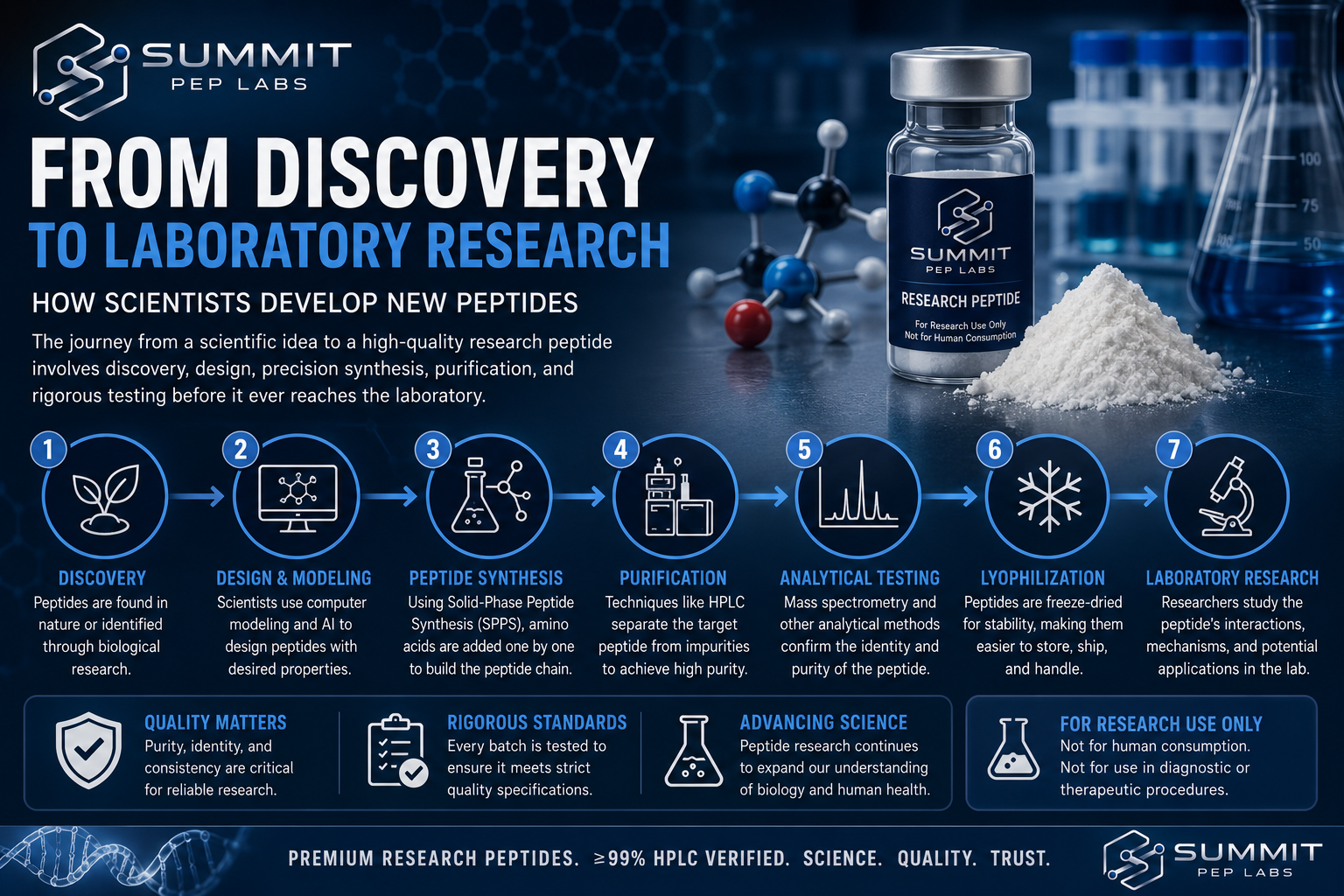
🧬 How Scientists Develop New Peptides
⚡ Inside the Cell: How Peptides Trigger Cellular Communication (Coming Soon)
📖 Scientific References
- Lee C, et al. “The mitochondrial-derived peptide MOTS-c promotes metabolic homeostasis and reduces obesity and insulin resistance.” Cell Metabolism. 2015. https://pubmed.ncbi.nlm.nih.gov/25936842/
- Reynolds JC, et al. “MOTS-c is an exercise-induced mitochondrial-encoded regulator of age-dependent physical decline.” Nature Communications. 2021. https://pubmed.ncbi.nlm.nih.gov/30415836/
- National Center for Biotechnology Information (PubMed): https://pubmed.ncbi.nlm.nih.gov/?term=MOTS-c
🏁 Final Thoughts
MOTS-C has emerged as one of the most intriguing peptides in modern biomedical research because it represents a new way of thinking about mitochondria—not simply as cellular power plants, but as active signaling organelles capable of influencing metabolism and gene expression. Its mitochondrial origin, interaction with energy-sensing pathways such as AMPK, and expanding body of scientific literature have made it a focal point in studies of metabolism, exercise physiology, and healthy aging.
As research continues, MOTS-C is likely to remain an important molecule for understanding how mitochondria communicate with the rest of the cell and adapt to changing metabolic demands.
additional mots-c research
FDA peptide compounding update. FDA Advisors Vote to Support Compounding of BPC-157, MOTS-C, TB-500, and KPV: What It Means for Peptide Research
MOTS-c Benefits for Mitochondrial Research
MOTS-c vs NAD+
MOTS-c Benefits
What is MOTS-C?