❄️ What Is Lyophilization? Why Research Peptides Are Freeze-Dried
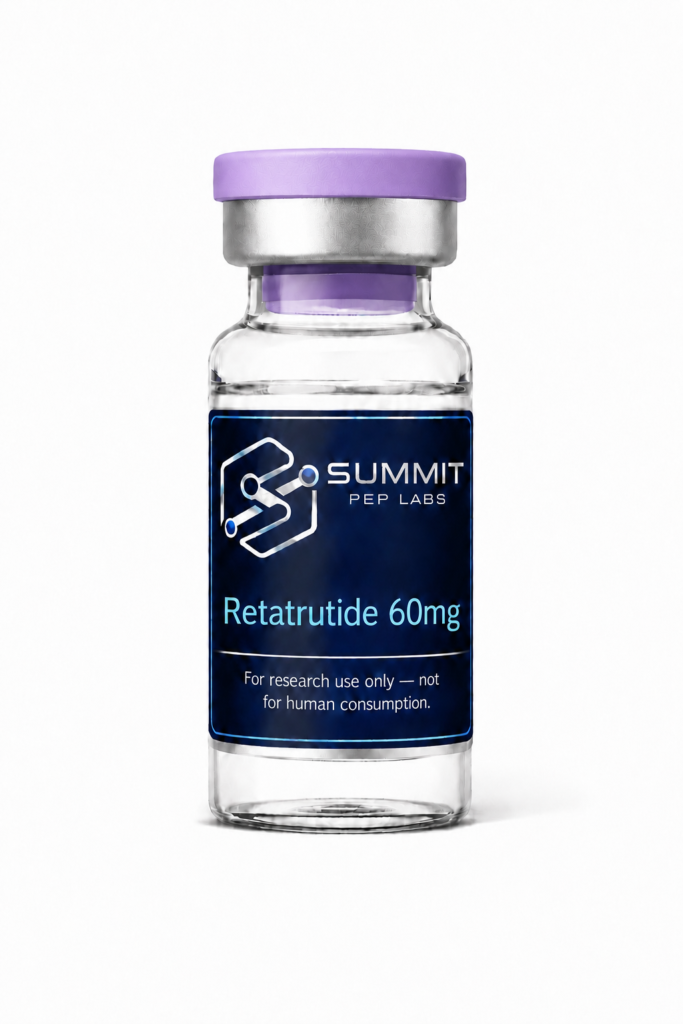
If you’ve ever opened a vial of a research peptide, you’ve probably noticed that it contains a small amount of white powder instead of liquid.
This isn’t an accident—it’s the result of a highly specialized preservation process called lyophilization, more commonly known as freeze-drying.
Lyophilization is one of the most important steps in peptide manufacturing because it helps preserve delicate molecules during storage and transportation. Without it, many peptides would degrade much more quickly, reducing their usefulness for laboratory research.
In this article, we’ll explain how lyophilization works, why it’s used, and why it has become the industry standard for research peptides.
Research Use Only: All products sold by Summit Pep Labs are intended exclusively for laboratory research and are not approved for human consumption or therapeutic use.
🧬 What Is Lyophilization?
Lyophilization is a dehydration process that removes water from a substance while keeping its molecular structure largely intact.
Unlike traditional drying methods that use heat, lyophilization removes water through sublimation—a process where frozen water changes directly from ice into vapor without becoming liquid.
Because peptides can be sensitive to heat and moisture, this technique is especially valuable for preserving their integrity.
🧊 How Does Freeze-Drying Work?
Although the equipment used is highly sophisticated, the basic process follows three main stages.
| Step | What Happens |
|---|---|
| ❄️ Freezing | The peptide solution is rapidly frozen. |
| 🌡️ Vacuum | Air pressure is reduced inside a vacuum chamber. |
| 💨 Sublimation | Ice transforms directly into water vapor, leaving behind a dry peptide powder. |
The end result is the familiar white cake or powder found in research peptide vials.
🔬 Why Aren’t Peptides Sold as Liquids?
Many biological molecules begin to degrade once they’re dissolved in solution.
Water can contribute to:
- Hydrolysis
- Oxidation
- Reduced stability
- Shorter storage life
By removing nearly all moisture, manufacturers can significantly improve the stability of many research peptides before they’re reconstituted in the laboratory.
📦 Benefits of Lyophilized Peptides
Researchers value freeze-dried peptides for several reasons.
✅ Improved Stability
Removing water slows many chemical reactions that can break down peptide molecules over time.
🚚 Easier Transportation
Dry peptides are generally less sensitive during shipping than pre-mixed liquid formulations.
🧪 Flexible Laboratory Preparation
Researchers can reconstitute the peptide according to the specific concentration required for their experimental protocols.
📅 Longer Shelf Life
When stored appropriately, lyophilized peptides typically remain stable longer than equivalent liquid preparations.
⚠️ Does Freeze-Drying Make Peptides Permanent?
No.
Lyophilization greatly improves stability, but it does not make peptides indestructible.
Researchers should still protect peptides from:
- Excessive heat
- Moisture
- Repeated temperature changes
- Extended light exposure
- Improper storage after reconstitution
Proper handling remains an essential part of maintaining research quality.
Peptide Storage & Handling Guide
🧪 Why Reconstitution Matters
Before laboratory use, researchers typically dissolve the lyophilized peptide in an appropriate laboratory solvent.
At this stage, the peptide returns to solution and becomes more susceptible to degradation over time.
This is one reason why laboratories carefully plan storage conditions after reconstitution.
Why Are Peptides Measured in Milligrams Instead of IU?
🧬 Is Every Peptide Freeze-Dried?
Most research peptides are supplied in lyophilized form, but not every biological product requires the same manufacturing process.
The preferred formulation depends on several factors, including:
- Molecular stability
- Intended research application
- Manufacturing considerations
- Storage requirements
Researchers should always follow the supplier’s handling recommendations for the specific peptide being studied.
🔍 How Does Lyophilization Affect Purity?
A common misconception is that freeze-drying increases peptide purity.
It does not.
Purity is determined before lyophilization through analytical methods such as High-Performance Liquid Chromatography (HPLC).
Lyophilization helps preserve the peptide after manufacturing—it doesn’t change the composition of the product itself.
What Does 99% HPLC Purity Mean?
🌟 Examples of Lyophilized Research Peptides
Many commonly studied peptides are supplied as freeze-dried powders, including:
| Research Peptide | Typical Form |
|---|---|
| 🧬 Retatrutide | Lyophilized powder |
| ⚡ MOTS-C | Lyophilized powder |
| 🩹 BPC-157 | Lyophilized powder |
| 🧪 GHK-Cu | Lyophilized powder |
| 🧠 Semax | Lyophilized powder |
| 🔬 TB-500 | Lyophilized powder |
❓ Frequently Asked Questions
What is a lyophilized peptide?
A lyophilized peptide is a peptide that has been freeze-dried to remove water while helping preserve its stability for laboratory research.
Why are peptides freeze-dried?
Freeze-drying helps reduce moisture-related degradation and allows peptides to be stored and transported more effectively before laboratory reconstitution.
Does freeze-drying affect purity?
No. Purity is determined through analytical testing before the lyophilization process.
Why do peptides need to be reconstituted?
Researchers reconstitute lyophilized peptides to prepare solutions at concentrations appropriate for their laboratory protocols.
🏁 Final Thoughts
Lyophilization is one of the most important processes in peptide manufacturing. By carefully removing water through freeze-drying, manufacturers can help preserve peptide stability and provide researchers with materials that are better suited for storage, transportation, and laboratory preparation.
Although freeze-drying doesn’t change a peptide’s purity or biological properties, it plays a critical role in protecting these delicate molecules until they’re ready to be used in research.
As peptide science continues to advance, understanding the manufacturing processes behind these compounds helps researchers make more informed decisions about handling, storage, and experimental preparation.