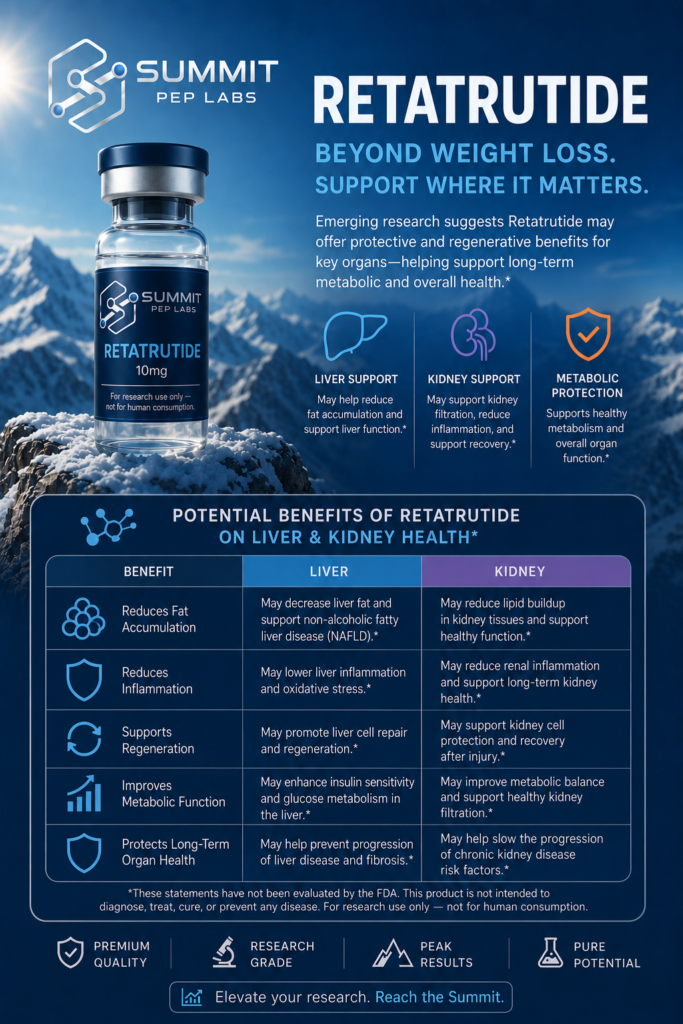
Retatrutide, a triple hormone receptor agonist (GLP-1, GIP, and Glucagon), shows significant potential for treating metabolic dysfunction-associated steatotic liver disease (MASLD) and providing kidney protection. Clinical trials indicate it dramatically reduces liver fat by over 85%, potentially reversing fatty liver disease, while also lowering the urine albumin-to-creatinine ratio (UACR) and improving estimated glomerular filtration rate (eGFR), indicating improved kidney function.
Liver Benefits (MASLD/Fatty Liver)
- Drastic Fat Reduction: Studies showed up to 93% of patients on higher doses (12 mg) reduced liver fat to below 5% (normal levels) by week 48.
- Resolution of Steatosis: Over 85% of participants experienced resolution of hepatic steatosis, as reported in.
- Reduced Liver Damage: It lowers markers of liver injury and inflammation, with potential to reduce liver fibrosis.
- Mechanism: Its glucagon component is believed to play a key role in improving hepatic fat metabolism, as noted in.
Kidney Benefits
- Improved Filtration: In studies, retatrutide was associated with improvements in eGFR (a marker of kidney function) in obese participants, as discussed in.
- Reduced Albuminuria: Retatrutide showed a 37% reduction in UACR compared to placebo, indicating reduced kidney damage in patients with T2D.
- Protection against Damage: Researchers suggest its metabolic improvements may provide renoprotective effects. National Institutes of Health (.gov) +1
Key Considerations
- Still in Trials: These benefits are from Phase 2 clinical trials; the drug is not yet approved.
- Long-term Study: Phase 3 trials, such as the TRANSCEND-CKD study and the TRIUMPH-Outcomes trial, are ongoing to confirm these long-term benefits.
- Weight-Independent Effects: Research suggests some liver benefits may be direct and not solely due to weight loss, notes.
Retatrutide 10 Product Page
Retatrutide 20 Product Page
Retatrutide 60 Product Page