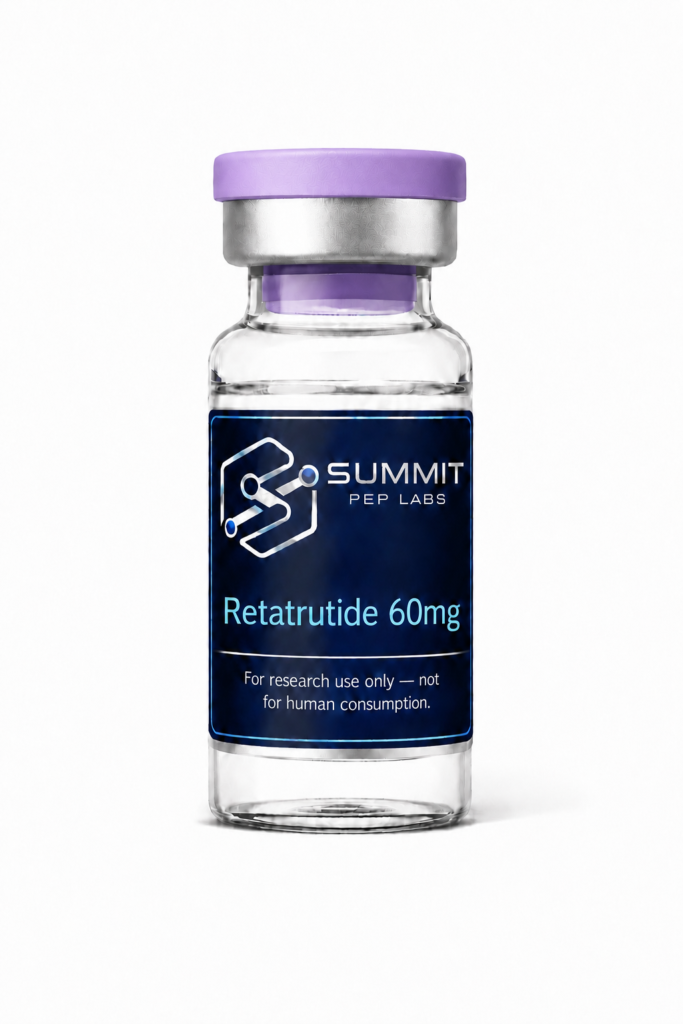
🧬 Retatrutide Half-Life
Understanding the Pharmacokinetics of This Triple Agonist Research Peptide
Research Use Only
Retatrutide is an investigational peptide studied in laboratory and clinical research settings. This article is provided for educational purposes only and discusses current areas of scientific investigation. Research-grade Retatrutide is not approved for human consumption and is not intended to diagnose, treat, cure, or prevent any disease.
🔬 What Is the Half-Life of Retatrutide?
One of the most frequently searched questions about this investigational peptide is:
“What is the half-life of Retatrutide?”
In pharmacology, a compound’s half-life refers to the amount of time required for approximately half of the compound to be eliminated from the body.
Researchers study half-life because it helps explain:
- 🧬 How long a compound remains active
- ⏱️ Pharmacokinetic behavior
- 📈 Drug exposure over time
- 🔄 Elimination patterns
- ⚡ Receptor engagement duration
Retatrutide has attracted significant attention because its extended half-life supports ongoing research into long-acting metabolic peptides.
📊 Retatrutide Quick Facts
| Feature | Retatrutide |
|---|---|
| Compound Type | Triple receptor agonist |
| Receptors Targeted | GLP-1, GIP, Glucagon |
| Research Status | Investigational |
| Primary Research Areas | Metabolism, energy regulation, incretin biology |
| Approximate Half-Life Reported in Research | Around one week* |
*Published clinical research has reported a half-life of approximately one week, contributing to interest in once-weekly investigational dosing schedules.
⏳ What Does “Half-Life” Mean?
Half-life is one of the most important concepts in pharmacokinetics.
It describes how quickly a compound is cleared from biological systems.
Researchers evaluate half-life to better understand:
- Duration of receptor activation
- Drug accumulation
- Steady-state concentrations
- Clearance mechanisms
- Study design considerations
Compounds with longer half-lives typically remain measurable for extended periods after administration.
🧪 Why Retatrutide Has a Long Half-Life
Retatrutide belongs to a class of long-acting peptide therapeutics engineered to remain in circulation longer than many naturally occurring hormones.
Researchers continue investigating how its molecular design contributes to:
- Extended systemic exposure
- Sustained receptor interaction
- Reduced dosing frequency in research settings
- Stable pharmacokinetic profiles
These characteristics have made Retatrutide a major focus of metabolic research.
🔄 How Retatrutide Compares to Other GLP-1 Research Compounds
| Compound | Primary Receptors | Approximate Reported Half-Life |
|---|---|---|
| Semaglutide | GLP-1 | ~1 week |
| Tirzepatide | GLP-1 + GIP | ~5 days |
| Retatrutide | GLP-1 + GIP + Glucagon | ~1 week |
Although each compound has unique pharmacological properties, all three were developed with extended activity in mind to support long-acting research models.
🧬 Why Half-Life Matters in Research
Researchers continue studying Retatrutide’s half-life because it may influence:
- Duration of receptor activation
- Pharmacokinetic modeling
- Metabolic signaling studies
- Longitudinal laboratory investigations
- Comparative peptide research
Understanding how long a compound remains active is essential when designing laboratory studies.
⚙️ Retatrutide and Steady-State Research
Another important concept related to half-life is steady state.
Steady state occurs when the amount of compound entering the system is balanced by the amount being eliminated.
Researchers investigate steady-state pharmacokinetics to better understand:
- Drug accumulation
- Exposure consistency
- Receptor occupancy
- Long-term metabolic signaling
These investigations remain important in ongoing clinical development.
📈 Why Pharmacokinetics Are Important
Pharmacokinetic research helps scientists understand:
- 🧬 Absorption
- 🚚 Distribution
- ⚙️ Metabolism
- 🗑️ Elimination
Together, these processes determine how a compound behaves within biological systems.
Retatrutide continues to be studied because its pharmacokinetic profile differs from earlier generations of incretin-based compounds.
🌎 Why Retatrutide Continues to Trend
Scientific interest continues growing because researchers are investigating:
- Triple agonist biology
- Extended pharmacokinetics
- Metabolic flexibility
- Energy regulation
- Incretin signaling
- Healthy aging research
Its long half-life is one of several characteristics contributing to widespread scientific interest.
📋 Retatrutide Half-Life Summary
| Category | Retatrutide |
|---|---|
| Molecule Type | Triple agonist peptide |
| Primary Research Focus | Metabolic signaling |
| Reported Half-Life | Approximately one week |
| Research Status | Investigational |
| Scientific Interest | High |
❓ Frequently Asked Questions
What is the half-life of Retatrutide?
Published clinical research has reported an approximate half-life of around one week, making Retatrutide one of several long-acting investigational incretin-based peptides.
Why is Retatrutide’s half-life important?
Researchers study half-life because it helps explain how long a compound remains active, how it interacts with receptors over time, and how pharmacokinetic behavior influences laboratory study design.
Does Retatrutide have a longer half-life than Tirzepatide?
Published pharmacokinetic data suggest that Retatrutide has a half-life of approximately one week, while Tirzepatide has been reported at approximately five days. Researchers continue comparing these compounds as clinical development progresses.
Is Retatrutide considered long-acting?
Yes. Researchers generally classify Retatrutide as a long-acting investigational peptide due to its extended pharmacokinetic profile.
Is research-grade Retatrutide approved for human use?
No. Research-grade Retatrutide products are intended for laboratory research only. They are not approved for human consumption or for diagnosing, treating, curing, or preventing any disease.
🏁 Final Thoughts
When discussing the Retatrutide half-life, researchers are referring to one of the compound’s most important pharmacokinetic characteristics. Its reported approximately one-week half-life supports ongoing investigations into long-acting metabolic signaling, receptor biology, and incretin-based research.
As interest in next-generation peptide science continues to expand, Retatrutide remains one of the most closely studied investigational compounds in metabolic and longevity research.
Disclaimer: Retatrutide products are intended for laboratory research only. They are not approved for human consumption and are not intended to diagnose, treat, cure, or prevent any disease. This article summarizes current areas of scientific investigation and is provided for educational purposes only.
10mg Retatrutide Product Page Retatrutide Research
20mg Retatrutide Product Page Retatrutide Research
60mg Retatrutide Product Page Retatrutide Research