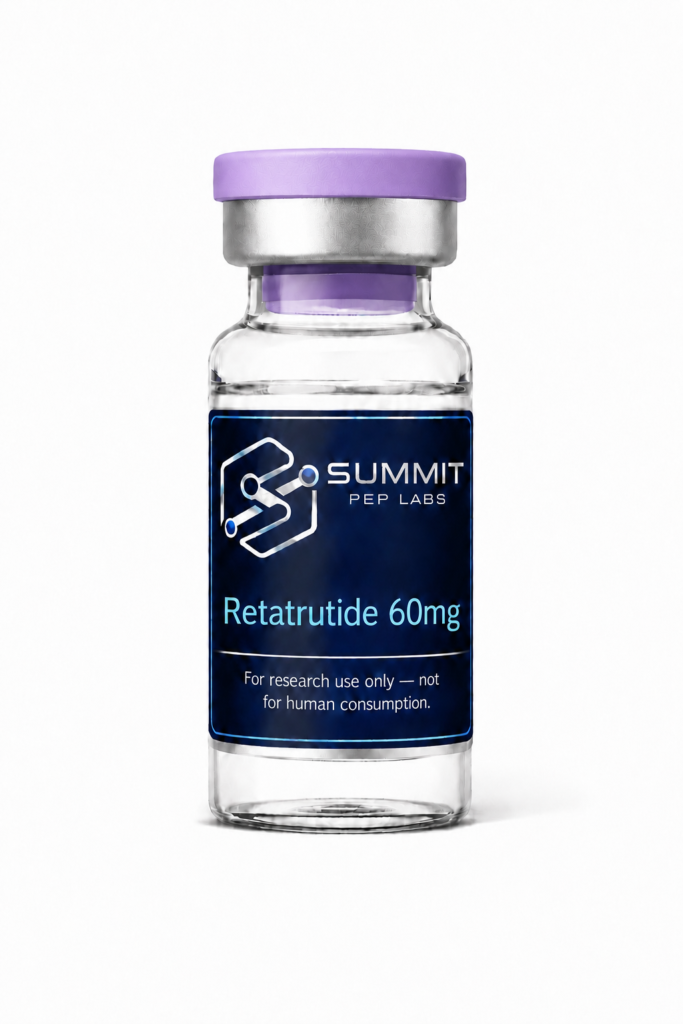
🧬 How Does Retatrutide Work?
Understanding the Science Behind This Triple Agonist Research Peptide
Research Use Only
Retatrutide is an investigational research peptide intended for laboratory research only. This guide is provided for educational purposes and discusses the biological mechanisms currently being investigated by researchers.
🔬 How Does Retatrutide Work?
One of the most frequently searched questions is:
“How does Retatrutide work?”
Retatrutide has become one of the most talked-about investigational peptides because it interacts with three separate metabolic receptors, making it one of the most complex incretin-based compounds currently being studied.
Unlike earlier GLP-1 research peptides that activate only one or two receptors, Retatrutide combines three different biological pathways into a single molecule.
Researchers continue investigating how this unique mechanism may influence:
- ⚡ Energy metabolism
- 🍽️ Appetite signaling
- 🔥 Energy expenditure
- 🔄 Metabolic flexibility
- ⚖️ Body composition
- 🧬 Hormonal communication
🧪 What Makes Retatrutide Different?
Retatrutide is commonly described as a triple agonist because it activates three separate receptor systems.
| Receptor | Research Area |
|---|---|
| 🟢 GLP-1 | Appetite signaling and glucose-dependent metabolic pathways |
| 🔵 GIP | Incretin signaling and nutrient metabolism |
| 🟠 Glucagon | Energy expenditure and metabolic flexibility |
This combination is what distinguishes Retatrutide from earlier generations of incretin research compounds.
⚙️ Understanding the Three Pathways
🟢 GLP-1 Receptor
The GLP-1 receptor has been extensively studied for its role in metabolic regulation.
Researchers investigate GLP-1 activity in relation to:
- Appetite signaling
- Gastric emptying
- Glucose-dependent insulin secretion
- Energy intake
- Metabolic regulation
Semaglutide is one of the best-known compounds that primarily targets this receptor.
🔵 GIP Receptor
The second pathway involves the Glucose-Dependent Insulinotropic Polypeptide (GIP) receptor.
Current research explores its role in:
- Hormonal communication
- Nutrient utilization
- Metabolic regulation
- Energy balance
Adding GIP receptor activity represented a major advancement beyond traditional GLP-1-only compounds.
🟠 Glucagon Receptor
The third receptor is what makes Retatrutide unique.
Researchers continue studying glucagon receptor activation because of its potential involvement in:
- Energy expenditure
- Fuel utilization
- Metabolic flexibility
- Cellular energy balance
This additional pathway is one reason Retatrutide has generated considerable scientific interest.
📊 Comparing Modern Incretin Research Compounds
| Compound | Receptors Activated |
|---|---|
| Semaglutide | GLP-1 |
| Tirzepatide | GLP-1 + GIP |
| Retatrutide | GLP-1 + GIP + Glucagon |
This progression illustrates how incretin research has evolved from single-receptor activation to increasingly sophisticated multi-pathway investigations.
🧬 Why Are Researchers Interested in Triple Agonists?
Scientists continue exploring whether activating multiple metabolic receptors simultaneously may provide a broader understanding of complex metabolic signaling.
Areas of ongoing investigation include:
- ⚡ Cellular energy regulation
- 🔄 Metabolic flexibility
- 🔥 Energy expenditure
- 🍽️ Appetite pathways
- 🧬 Hormonal interactions
- ⚖️ Body composition research
Retatrutide remains investigational, and research into these mechanisms is ongoing.
📈 Why Has Retatrutide Become So Popular?
Interest in Retatrutide has increased rapidly because it represents the next step in incretin-based research.
Researchers are particularly interested in its:
- Triple receptor activity
- Novel mechanism of action
- Expanded metabolic pathway engagement
- Advanced peptide design
- Potential applications in metabolic research models
As new studies emerge, Retatrutide continues to be one of the most discussed compounds in peptide science.
🌎 Modern Research Applications
Researchers continue studying Retatrutide within laboratory models involving:
- Metabolic biology
- Energy homeostasis
- Appetite signaling
- Hormonal regulation
- Body composition
- Longevity science
- Endocrine signaling
These investigations seek to better understand how multiple receptor systems interact to regulate metabolism.
📋 Quick Facts
| Feature | Retatrutide |
|---|---|
| Compound Type | Triple agonist research peptide |
| Receptors | GLP-1, GIP, Glucagon |
| Research Areas | Metabolism, energy regulation, body composition |
| Current Status | Investigational |
| Growing Interest | Triple-pathway metabolic research |
❓ Frequently Asked Questions
How does Retatrutide work?
Retatrutide works by interacting with three metabolic receptor systems: GLP-1, GIP, and glucagon receptors. Researchers are investigating how this triple agonist mechanism influences metabolic signaling, energy balance, and hormonal communication.
Why is Retatrutide different from Semaglutide?
Semaglutide activates only the GLP-1 receptor, while Retatrutide activates GLP-1, GIP, and glucagon receptors, making it a triple agonist.
Is Retatrutide stronger than Tirzepatide?
Retatrutide is not considered “stronger” in a general sense. Instead, it activates an additional receptor (glucagon) beyond the two targeted by Tirzepatide. Researchers are studying how this expanded mechanism influences metabolic signaling.
Why is Retatrutide attracting so much attention?
Its unique triple receptor activity has made Retatrutide one of the fastest-growing topics in metabolic and peptide research.
Is Retatrutide approved for human use?
Retatrutide remains an investigational compound. Research-grade products are intended for laboratory research only and are not approved for human consumption.
🏁 Final Thoughts
If you’ve been asking “How does Retatrutide work?”, the answer lies in its innovative triple agonist mechanism. By activating GLP-1, GIP, and glucagon receptors, Retatrutide has become one of the most advanced investigational peptides currently being studied in metabolic research.
As scientific understanding of incretin biology continues to evolve, Retatrutide remains at the forefront of research into energy regulation, hormonal signaling, and metabolic function.
Disclaimer: Retatrutide products are intended for laboratory research only. They are not approved to diagnose, treat, cure, or prevent any disease and are not intended for human consumption.