🧬 GLP-1 vs GLP-3
Is There a GLP-3? Understanding the Difference Between GLP-1 and Modern Triple Agonist Research
Research Use Only
This article is provided for educational purposes only and discusses biological pathways currently being investigated in scientific research. Research peptides are intended for laboratory research only and are not approved for human consumption.
🔬 Is There a GLP-3?
One of the most common questions appearing in search results is:
“What is the difference between GLP-1 and GLP-3?”
The short answer is:
There is currently no recognized hormone or receptor known as GLP-3 in human physiology.
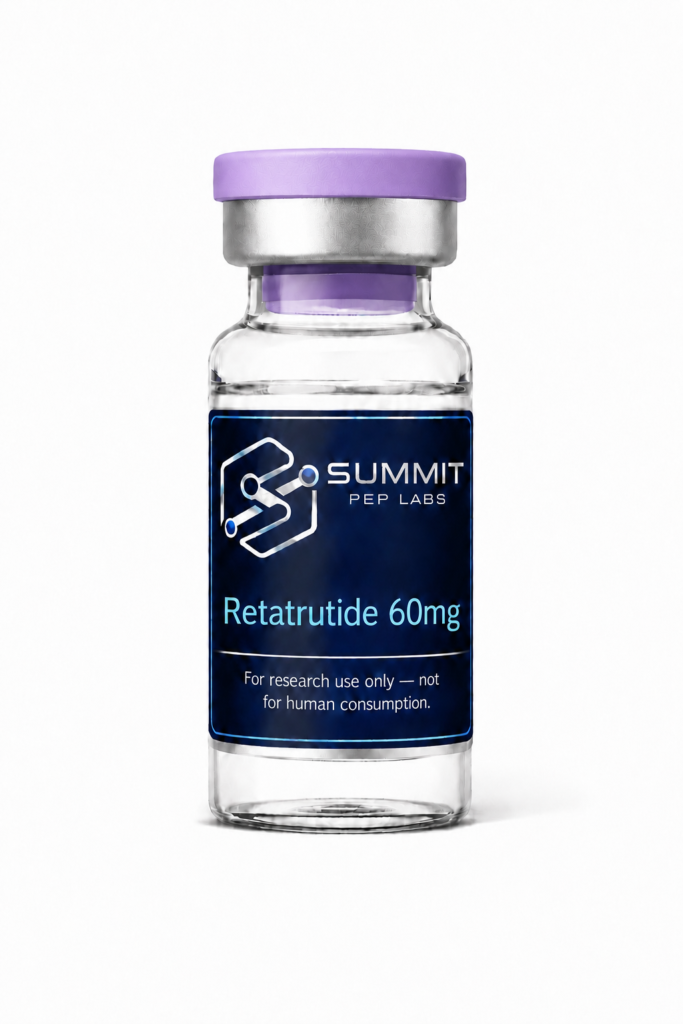
Many people search for “GLP-3” because they have heard about newer research peptides like Retatrutide, which targets three different receptors instead of one.
This has led to a common misconception that Retatrutide is a “GLP-3 peptide.” In reality, that is not how it works.
📊 Quick Comparison
| Feature | GLP-1 | “GLP-3” |
|---|---|---|
| Exists in Human Biology? | ✅ Yes | ❌ No recognized hormone or receptor |
| Research Interest | Very High | Common search misconception |
| Receptor Type | GLP-1 Receptor | Not recognized |
| Related to Retatrutide? | ✅ Yes | ❌ No |
🧪 What Is GLP-1?
GLP-1 stands for Glucagon-Like Peptide-1, a naturally occurring hormone produced in the intestine after food intake.
Researchers study GLP-1 because it plays an important role in several biological processes, including:
- 🍽️ Appetite signaling
- 🔄 Glucose-dependent metabolic regulation
- ⏱️ Gastric emptying
- ⚡ Energy balance
- 🧬 Hormonal communication
These functions have made GLP-1 one of the most extensively studied metabolic pathways in modern peptide research.
🔬 Why Do People Search for “GLP-3”?
The confusion usually comes from newer compounds that activate multiple receptors.
Researchers now study several generations of incretin-based peptides:
| Compound | Receptors Activated |
|---|---|
| Semaglutide | GLP-1 |
| Tirzepatide | GLP-1 + GIP |
| Retatrutide | GLP-1 + GIP + Glucagon |
Because Retatrutide activates three receptors, some people mistakenly assume it is a “GLP-3” peptide.
However, Retatrutide still activates the GLP-1 receptor—it simply adds two additional receptor targets.
🧬 Understanding Triple Agonists
Retatrutide belongs to a class of investigational compounds known as triple agonists.
Researchers continue studying three receptor systems:
🟢 GLP-1 Receptor
Associated with:
- Appetite signaling
- Metabolic regulation
- Glucose-dependent pathways
🔵 GIP Receptor
Researchers investigate GIP for its role in:
- Nutrient metabolism
- Hormonal communication
- Energy regulation
🟠 Glucagon Receptor
Current research explores its involvement in:
- Energy expenditure
- Fuel utilization
- Metabolic flexibility
Together, these three pathways form the basis of Retatrutide’s unique mechanism of action.
📈 Evolution of Modern GLP Research
Research into incretin biology has evolved significantly over the past decade.
First Generation
🟢 GLP-1
Examples include:
- Semaglutide
- Liraglutide
Second Generation
🟢 GLP-1
➕
🔵 GIP
Example:
- Tirzepatide
Third Generation
🟢 GLP-1
➕
🔵 GIP
➕
🟠 Glucagon
Example:
- Retatrutide
Although some people informally refer to this as a “third-generation GLP peptide,” it should not be confused with a hormone called “GLP-3.”
🌎 Why GLP-1 Research Continues Growing
Researchers remain interested in GLP-1 biology because of its role in:
- ⚡ Energy metabolism
- 🍽️ Appetite regulation
- 🔄 Metabolic signaling
- 🧬 Endocrine physiology
- 📈 Incretin biology
As additional receptor pathways are incorporated into newer investigational compounds, scientists continue expanding their understanding of complex metabolic signaling networks.
🔬 Why Retatrutide Has Generated So Much Interest
Retatrutide is one of the newest investigational peptides in metabolic research because it combines three receptor targets into a single molecule.
Researchers continue studying its interaction with:
- GLP-1 receptors
- GIP receptors
- Glucagon receptors
Its triple agonist mechanism has made it one of the most discussed compounds in contemporary peptide research.
📋 GLP-1 vs “GLP-3” Summary
| Question | Answer |
|---|---|
| Does GLP-3 exist? | No recognized human hormone or receptor is known as GLP-3. |
| Why do people search for GLP-3? | The term is commonly used by mistake when referring to triple agonist peptides like Retatrutide. |
| What does Retatrutide target? | GLP-1, GIP, and glucagon receptors. |
| Is Retatrutide a GLP-3 peptide? | No. It is a triple receptor agonist, not a GLP-3 peptide. |
❓ Frequently Asked Questions
Is GLP-3 a real hormone?
No. Current scientific literature does not recognize a hormone or receptor called GLP-3 in humans.
Why do people say Retatrutide is GLP-3?
This is a common misunderstanding. Retatrutide activates three receptors—GLP-1, GIP, and glucagon—which has led some people to incorrectly refer to it as “GLP-3.”
What is the difference between GLP-1 and Retatrutide?
GLP-1 is a naturally occurring hormone and receptor pathway. Retatrutide is an investigational peptide that activates the GLP-1 receptor along with GIP and glucagon receptors.
Is Retatrutide considered a triple agonist?
Yes. Researchers classify Retatrutide as a triple agonist because it activates three distinct receptor systems involved in metabolic signaling.
Why is GLP-1 important in research?
GLP-1 is studied because of its role in appetite signaling, glucose-dependent metabolism, gastric emptying, and broader endocrine regulation.
🏁 Final Thoughts
If you’ve searched for “GLP-1 vs GLP-3,” it’s important to know that GLP-3 is not currently recognized as a hormone or receptor in human biology. The confusion often arises from newer investigational compounds like Retatrutide, which activate three different receptors rather than a single GLP-1 pathway.
As metabolic and incretin research continues to advance, understanding the distinction between GLP-1 signaling and triple agonist mechanisms can help researchers better interpret the evolving scientific literature.
Disclaimer: All products referenced by Summit Pep Labs are intended for laboratory research only. They are not approved for human consumption and are not intended to diagnose, treat, cure, or prevent any disease. This article is provided for educational purposes only and summarizes current areas of scientific investigation.
Retatrutide Product page 1
Retatrutide Product page 2
Retatrutide Product page 3
Retatrutide research