🧬 KLOW Peptide Benefits
Why Researchers Continue Studying This Multi-Peptide Research Blend
Research Use Only
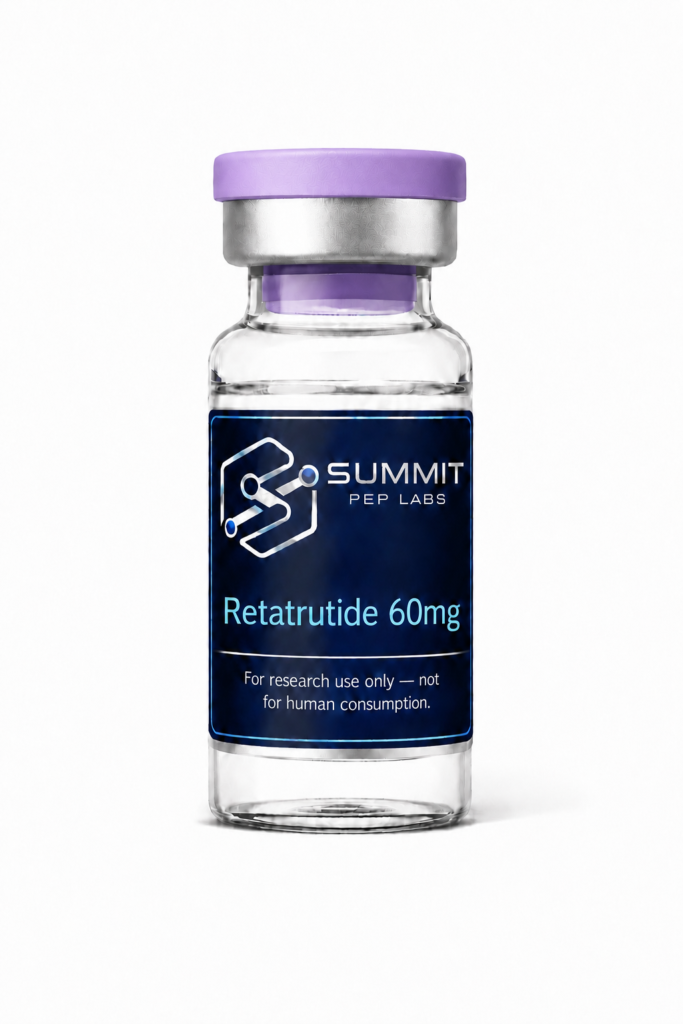
KLOW is a research peptide blend that combines BPC-157, TB-500, GHK-Cu, and KPV. This article is intended for educational and laboratory research purposes only. KLOW products are not approved for human consumption and are not intended to diagnose, treat, cure, or prevent any disease.
🔬 What Are the Potential Benefits of KLOW?
One of the most common questions researchers ask is:
“What are the benefits of KLOW?”
Within peptide research, the term “benefits” refers to the biological pathways and areas of scientific investigation—not established therapeutic effects.
KLOW combines four widely studied research peptides into a single investigational blend, making it a topic of interest for researchers examining multiple cellular processes simultaneously.
Scientists continue exploring KLOW in relation to:
- 🧬 Cellular signaling
- 🔄 Tissue remodeling
- 🛡️ Cellular resilience
- ⚡ Recovery-related pathways
- ✨ Skin biology research
- 🧪 Inflammatory signaling
- ⏳ Healthy aging investigations
📊 KLOW Quick Facts
| Feature | KLOW |
|---|---|
| Blend Components | BPC-157 + TB-500 + GHK-Cu + KPV |
| Research Category | Multi-peptide research blend |
| Primary Focus | Tissue biology, cellular signaling, regenerative research |
| Research Status | Investigational |
| Scientific Interest | High |
🧬 What’s Inside KLOW?
KLOW combines four well-known research peptides, each studied for different biological pathways.
| Peptide | Current Research Focus |
|---|---|
| BPC-157 | Tissue biology, cellular signaling |
| TB-500 | Cell migration, tissue remodeling |
| GHK-Cu | Copper peptide signaling, extracellular matrix biology |
| KPV | Immune signaling and inflammatory pathway research |
Researchers are interested in how these peptides may complement one another when examined together in laboratory settings.
⚙️ Why Researchers Study Multi-Peptide Blends
Rather than investigating a single signaling pathway, researchers sometimes evaluate peptide blends that target multiple biological systems.
Combination research may focus on:
- Cellular communication
- Tissue organization
- Extracellular matrix biology
- Metabolic signaling
- Cellular adaptation
Studying multiple pathways together may provide additional insight into how biological systems interact under different research conditions.
🔄 KLOW and Tissue Biology Research
Several components within KLOW are widely investigated for their involvement in tissue biology.
Researchers continue exploring pathways related to:
- Cellular organization
- Structural protein regulation
- Connective tissue biology
- Cellular maintenance
- Matrix remodeling
Understanding these complex biological processes remains an active area of peptide research.
✨ KLOW and Skin Biology
GHK-Cu has become one of the most recognized copper peptides in skin biology research.
Scientists continue studying pathways involving:
- Collagen-related biology
- Extracellular matrix organization
- Cellular communication
- Dermal remodeling
- Tissue maintenance
These investigations contribute to broader research into regenerative biology and healthy aging.
🛡️ KLOW and Cellular Signaling
Each peptide within the KLOW blend participates in different areas of biological signaling.
Researchers continue investigating pathways related to:
- Cell-to-cell communication
- Cellular adaptation
- Stress-response signaling
- Tissue organization
- Homeostatic regulation
Together, these signaling pathways remain an important focus in modern peptide research.
🧪 KLOW and Inflammatory Pathway Research
KPV has generated increasing scientific interest because of its relationship with immune signaling.
Current areas of investigation include:
- Cellular immune communication
- Inflammatory signaling pathways
- Biological homeostasis
- Tissue response mechanisms
These studies continue expanding our understanding of complex immune-related biological systems.
⏳ KLOW and Healthy Aging Research
As longevity research continues to evolve, investigators have shown growing interest in peptides involved in cellular maintenance and communication.
Researchers continue studying KLOW in relation to:
- Cellular resilience
- Tissue integrity
- Regenerative biology
- Healthy aging science
- Cellular adaptation
Although research is ongoing, these areas continue driving scientific interest in multi-peptide formulations.
🌎 Why KLOW Continues to Gain Attention
Interest in KLOW has grown because it combines four extensively discussed research peptides into a single investigational blend.
Researchers continue exploring:
- 🧬 Cellular signaling
- 🔄 Tissue remodeling
- ✨ Skin biology
- 🛡️ Immune signaling
- ⏳ Longevity research
- ⚡ Recovery-related pathways
- 📈 Regenerative biology
Its broad research profile has made KLOW a popular topic within peptide science.
📦 What Researchers Look for When Purchasing KLOW
Researchers commonly evaluate suppliers based on quality and transparency.
🧪 Third-Party Testing
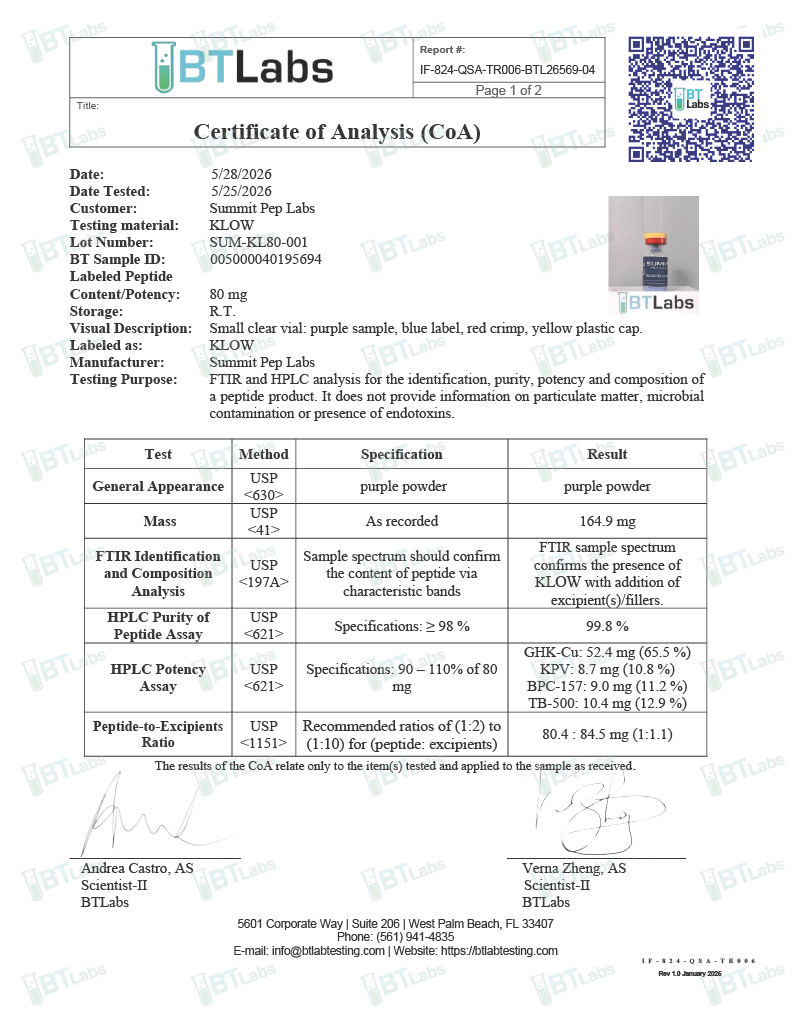
Independent laboratory testing may verify:
- Compound identity
- Purity
- Batch consistency
📄 Certificate of Analysis (COA)
Many researchers prefer suppliers that provide laboratory documentation confirming product quality.
🏭 Research-Grade Manufacturing
Reliable suppliers often emphasize:
- High-purity production
- Sterile manufacturing practices
- Proper lyophilization
- Consistent quality control
📦 Secure Packaging
Research peptides are commonly supplied as:
- Lyophilized powder
- Sterile sealed vials
- Clearly labeled research products
- Protective packaging
📋 KLOW Research Summary
| Category | KLOW |
|---|---|
| Blend Components | BPC-157, TB-500, GHK-Cu, KPV |
| Primary Focus | Cellular signaling & tissue biology |
| Research Areas | Regenerative biology, extracellular matrix research, immune signaling |
| Current Status | Investigational |
| Scientific Interest | High |
❓ Frequently Asked Questions
What are the potential benefits of KLOW?
Researchers continue studying KLOW for its potential involvement in tissue biology, cellular signaling, extracellular matrix research, immune signaling, and healthy aging investigations. These remain active areas of scientific research.
What peptides are included in KLOW?
KLOW combines BPC-157, TB-500, GHK-Cu, and KPV, each of which has distinct research applications and biological pathways under investigation.
Why do researchers study peptide blends like KLOW?
Researchers may investigate peptide blends to better understand how multiple biological signaling pathways interact within laboratory models.
Is KLOW approved for human use?
No. Research-grade KLOW products are intended for laboratory research only. They are not approved for human consumption or for diagnosing, treating, curing, or preventing any disease.
What should researchers look for when purchasing KLOW?
Researchers often prioritize:
- Third-party laboratory testing
- Certificate of Analysis (COA)
- Research-grade manufacturing
- High-purity production
- Supplier transparency
🏁 Final Thoughts
When discussing KLOW peptide benefits, it’s important to recognize that current scientific interest focuses on the blend’s involvement in cellular signaling, tissue biology, extracellular matrix research, immune communication, and regenerative science.
By combining BPC-157, TB-500, GHK-Cu, and KPV, KLOW provides researchers with an investigational blend that spans multiple areas of peptide research, making it a compelling subject for ongoing laboratory investigation.
As scientific interest in regenerative biology and healthy aging continues to expand, KLOW remains an increasingly discussed multi-peptide formulation within the research community.
Disclaimer: KLOW products are intended for laboratory research only. They are not approved for human consumption and are not intended to diagnose, treat, cure, or prevent any disease. This article is provided for educational purposes and summarizes current areas of scientific investigation.