GLP-1 vs GIP vs Glucagon: Understanding the Hormones Behind Modern Metabolic Research
🧬 GLP-1 vs. GIP vs. Glucagon: The Three Hormones Driving Modern Metabolic Research
In recent years, scientists have become increasingly interested in how the body regulates appetite, energy balance, and glucose metabolism. At the center of this research are three naturally occurring hormones: GLP-1 (Glucagon-Like Peptide-1), GIP (Glucose-Dependent Insulinotropic Polypeptide), and glucagon.
Each hormone has a unique role, but together they form a complex network that helps the body respond to food intake and changing energy demands.
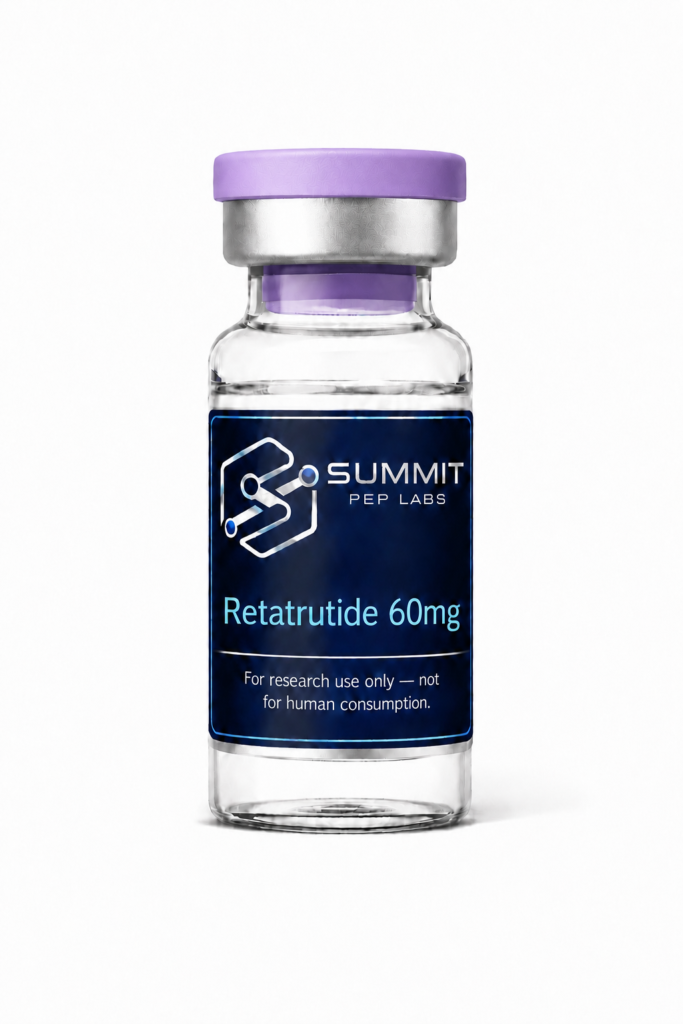
This growing understanding has also led researchers to investigate multi-receptor peptides, including Retatrutide, which is designed to activate all three pathways simultaneously.
⚠️ Research Use Only: Summit Pep Labs provides research compounds exclusively for laboratory research. Products are not intended for human consumption, diagnosis, or treatment.
🔬 What Is GLP-1?
GLP-1 is an incretin hormone produced primarily in the intestines after eating.
Researchers study GLP-1 because it is involved in several important physiological processes.
Areas of Research
- 🍽️ Appetite regulation
- 🩸 Glucose signaling
- ⏳ Gastric emptying
- 🧠 Communication between the gut and brain
GLP-1 receptors are found throughout the body, including the pancreas and central nervous system, making this pathway an important area of metabolic research.
⚡ What Is GIP?
GIP is another incretin hormone released after meals.
Although discovered decades ago, scientists are still uncovering how GIP interacts with other metabolic hormones.
Researchers are investigating its role in:
- 🍞 Nutrient sensing
- 🩸 Insulin signaling
- ⚖️ Energy balance
- 🧬 Fat metabolism
Current research suggests that GIP may work differently depending on whether it is activated alone or alongside other hormone pathways.
🔥 What Is Glucagon?
Glucagon is produced by the pancreas and generally acts in opposition to insulin.
Its primary role is to help maintain energy availability, particularly during periods when food is not being consumed.
Researchers study glucagon because it is involved in:
- ⚡ Energy expenditure
- 🍬 Glucose production by the liver
- 🏃 Fuel utilization
- 🧬 Metabolic adaptation
Modern research has shown that glucagon’s functions extend beyond simply increasing blood glucose.
📊 Comparing the Three Hormones
| Hormone | Primary Function | Current Research Areas |
|---|---|---|
| 🟢 GLP-1 | Appetite and glucose regulation | Satiety, gastric emptying, metabolic health |
| 🔵 GIP | Nutrient response | Insulin signaling, fat metabolism |
| 🔴 Glucagon | Energy availability | Energy expenditure, metabolic adaptation |
Rather than acting independently, these hormones continuously communicate to help maintain metabolic balance.
🧪 Why Researchers Are Studying Multiple Receptors
Early metabolic research often focused on single hormone pathways.
Today, scientists are increasingly interested in how multiple signaling systems interact.
This has led to the development of investigational compounds designed to activate more than one receptor at the same time.
Researchers hope this approach will provide a more complete understanding of metabolic regulation.
🧬 Where Does Retatrutide Fit In?
One of the most closely watched investigational peptides is Retatrutide.
Unlike earlier compounds that primarily targeted one or two receptors, Retatrutide is designed as a triple receptor agonist.
It activates:
✅ GLP-1 receptors
✅ GIP receptors
✅ Glucagon receptors
This makes it unique among investigational metabolic peptides.
Researchers are studying Retatrutide because activating these three pathways simultaneously may provide valuable insights into:
- ⚡ Energy regulation
- 🧬 Metabolic signaling
- 🍽️ Appetite regulation
- 🔥 Fuel utilization
➡️ Internal Link Opportunity: Link Retatrutide to your product page.
🧠 Why Is Multi-Receptor Research Important?
The human body rarely relies on a single hormone to control complex processes.
Instead, hormones work together through interconnected signaling networks.
Studying multiple pathways simultaneously may help researchers better understand:
- Communication between organs
- Energy homeostasis
- Nutrient utilization
- Hormonal feedback systems
- Cellular metabolism
🧬 Hormones Work as a Team
One reason compounds like Retatrutide have generated scientific interest is that they reflect the body’s natural complexity.
Rather than viewing GLP-1, GIP, and glucagon as isolated systems, researchers now recognize that these hormones constantly influence one another to maintain metabolic balance.
Understanding these interactions remains an active area of biomedical research.
📈 The Future of Metabolic Research
Research into incretin biology continues to expand rapidly.
Scientists are exploring how different hormone pathways influence:
| Research Area | Why It Matters |
|---|---|
| 🧬 Cellular metabolism | Energy production and utilization |
| 🍽️ Appetite regulation | Gut-brain signaling |
| ⚖️ Energy balance | Long-term metabolic regulation |
| 🏃 Exercise physiology | Fuel use during activity |
| 🔬 Hormonal communication | Interaction between metabolic pathways |
These discoveries continue to shape the next generation of investigational peptides.
🛒 Related Research Peptides
Researchers interested in metabolism often explore compounds such as:
- 🧬 Retatrutide
- 🧬 MOTS-C
- 🧬 NAD+
- 🧬 Cagrilintide
- 🧬 GHK-Cu
📚 Continue Reading
Strengthen your understanding with these related articles:
- 🧬 Retatrutide vs. Cagrilintide: What’s the Difference?
- ⚖️ Retatrutide vs. Tirzepatide
- ⚡ The Science of Mitochondria
- 🧪 What Does 99% HPLC Purity Mean?
- ❄️ Peptide Storage and Handling Guide
These internal links help readers discover related content while strengthening your site’s topical authority.
❓ Frequently Asked Questions
What is GLP-1?
GLP-1 is a naturally occurring incretin hormone that helps regulate appetite, gastric emptying, and glucose signaling.
What is GIP?
GIP is an incretin hormone released after meals that researchers study for its role in nutrient sensing and metabolic regulation.
What does glucagon do?
Glucagon helps maintain energy availability by supporting glucose production and influencing energy metabolism.
Why is Retatrutide different?
Retatrutide is being researched because it activates GLP-1, GIP, and glucagon receptors simultaneously, making it a triple receptor agonist.
Are these hormones naturally produced by the body?
Yes. GLP-1, GIP, and glucagon are all naturally occurring hormones involved in regulating metabolism and energy balance.
🌐 Scientific References
For readers interested in learning more:
- PubMed: https://pubmed.ncbi.nlm.nih.gov/
- National Center for Biotechnology Information (NCBI): https://www.ncbi.nlm.nih.gov/
- National Institute of Diabetes and Digestive and Kidney Diseases (NIDDK): https://www.niddk.nih.gov/
✅ Final Thoughts
GLP-1, GIP, and glucagon each play distinct roles in the body’s metabolic network, but they do not function in isolation. Their continuous interaction helps regulate appetite, nutrient handling, energy expenditure, and glucose balance. As researchers gain a deeper understanding of these pathways, they are uncovering new insights into how multiple hormones work together to maintain metabolic homeostasis.
Investigational compounds such as Retatrutide, which target all three receptor pathways, represent an exciting area of ongoing scientific research. While much remains to be learned, studies of multi-receptor signaling continue to advance our understanding of metabolism and may shape future discoveries in peptide science.