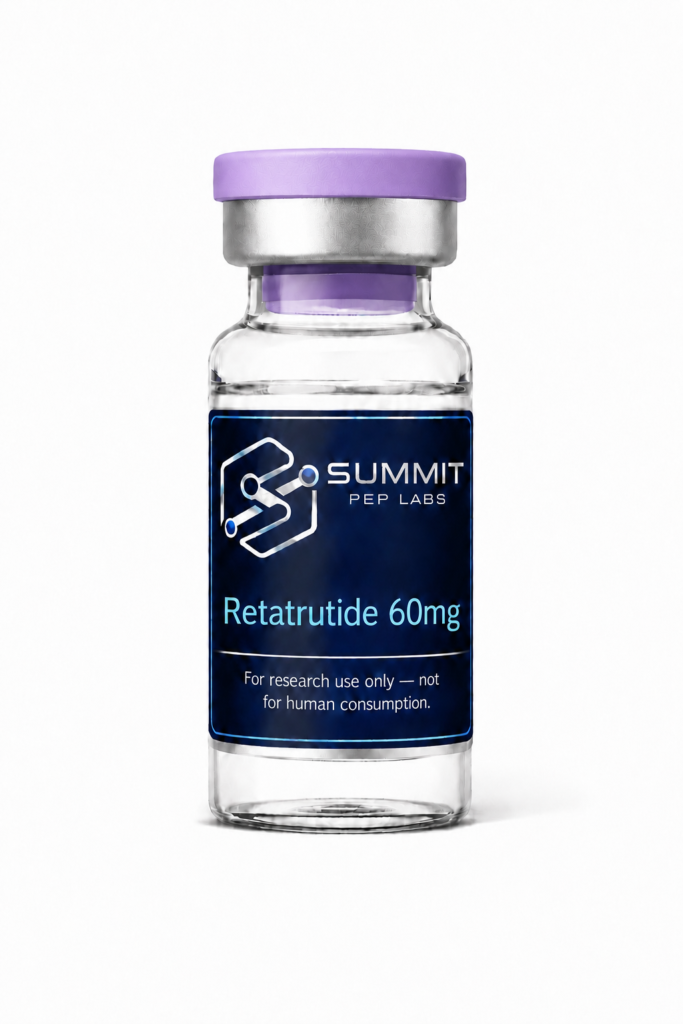
🧬 Peptide Storage and Handling Guide: Best Practices for Maintaining Peptide Quality
Proper peptide storage and handling is one of the most important parts of maintaining peptide stability during research.
Many research peptides are provided in a lyophilized (freeze-dried) powder form, which helps improve stability by removing moisture. However, factors such as temperature changes, humidity, light exposure, and improper handling can affect peptide integrity over time.
Whether researching peptides involved in cellular signaling, metabolic pathways, longevity research, or molecular biology, proper storage practices are essential.
⚠️ Disclaimer: Summit Pep Labs products are strictly intended for research and laboratory use only. They are not intended for human consumption, clinical use, or diagnostic purposes.
🔬 What Are Lyophilized Peptides?
Lyophilization, also called freeze-drying, is a preservation technique used to improve the stability of biological materials.
During lyophilization:
| Step | Process |
|---|---|
| ❄️ 1 | Peptide solution is frozen |
| 💨 2 | Water is removed through sublimation |
| 🧪 3 | Remaining peptide becomes a dry powder |
| 📦 4 | Product is sealed for storage |
Because moisture is removed, lyophilized peptides are generally more stable than liquid peptide solutions.
Common research compounds supplied in lyophilized form include:
❄️ How Should Peptides Be Stored?
The four biggest factors affecting peptide stability are:
| Storage Factor | Why It Matters |
|---|---|
| 🌡 Temperature | Heat can accelerate degradation |
| 💧 Moisture | Water exposure can reduce stability |
| ☀️ Light | Certain compounds may be light sensitive |
| 🔄 Temperature Changes | Repeated cycling may impact stability |
The goal of peptide storage is simple:
✅ Keep peptides dry
✅ Keep peptides protected from light
✅ Maintain stable temperatures
✅ Minimize unnecessary handling
🌡 What Temperature Should Peptides Be Stored At?
One of the most searched questions online is:
“What temperature should peptides be stored at?”
Storage conditions depend on the specific peptide, formulation, and manufacturer recommendations.
General research storage practices commonly include:
| Storage Type | Purpose |
|---|---|
| 🏠 Cool, dry storage | Short-term storage of sealed materials |
| ❄️ Refrigerated storage | Common approach for many research peptides |
| 🧊 Frozen storage | Used for extended preservation when appropriate |
Avoid storing peptides in locations with large temperature fluctuations.
Examples of poor storage locations:
❌ Inside vehicles
❌ Near ovens or appliances
❌ Direct sunlight
❌ Areas with high humidity
❓ Do Peptides Need Refrigeration?
A common question researchers ask is:
“Do peptides need to be refrigerated?”
Many researchers choose refrigerated storage for lyophilized peptides because lower temperatures may help slow degradation processes.
Best practices include:
✅ Keep peptides sealed until needed
✅ Avoid opening cold vials immediately
✅ Allow containers to reach room temperature before opening
✅ Prevent condensation from forming inside the vial
💡 Why Is Condensation a Problem?
When a cold vial is exposed to warmer air, moisture from the environment can collect on the vial.
This moisture can potentially affect the stability of freeze-dried materials.
To reduce condensation risk:
| Recommended Practice | Benefit |
|---|---|
| Allow vial temperature to stabilize | Reduces moisture exposure |
| Keep containers sealed | Protects contents |
| Avoid unnecessary opening | Limits environmental contact |
🌑 Protect Peptides From Light Exposure
Light exposure is another important consideration for peptide storage.
Recommended practices:
✔ Store peptides in their original packaging
✔ Keep away from direct sunlight
✔ Use dark storage containers when possible
✔ Avoid unnecessary exposure during handling
A cool, dark, and dry environment is generally preferred.
💧 Protect Peptides From Moisture
Moisture is one of the biggest enemies of lyophilized peptide stability.
Because freeze-dried peptides contain little to no water, introducing moisture can negatively affect the material.
Best practices:
| Practice | Reason |
|---|---|
| Keep vial caps closed | Prevent humidity exposure |
| Use clean handling techniques | Reduce contamination risk |
| Avoid humid environments | Protect dry powder stability |
| Limit vial opening | Reduce exposure |
🧪 Proper Peptide Handling Practices
Good handling techniques are essential for maintaining research quality.
Before handling peptides:
✅ Prepare a clean workspace
✅ Handle containers carefully
✅ Avoid touching vial openings
✅ Minimize exposure time
✅ Properly label samples
A simple labeling system can include:
| Information | Example |
|---|---|
| Compound | MOTS-C |
| Date Received | July 2026 |
| Storage Location | Refrigerated storage |
| Research Notes | Project documentation |
🧬 Peptide Reconstitution: Important Considerations
Many researchers reconstitute lyophilized peptides before laboratory use.
Important considerations include:
- Using appropriate laboratory procedures
- Maintaining cleanliness
- Avoiding repeated freeze-thaw cycles
- Properly documenting sample handling
After reconstitution, storage requirements may differ from the original lyophilized powder.
Always follow applicable laboratory guidelines and product documentation.
⚠️ Common Peptide Storage Mistakes
Avoid these common mistakes:
❌ Leaving Peptides in Heat
Example:
🚗 Leaving peptides inside a hot vehicle
High temperatures may negatively affect peptide stability.
❌ Repeated Temperature Cycling
Moving samples repeatedly between warm and cold environments may increase stress on the material.
❌ Excessive Handling
Opening containers unnecessarily increases exposure to:
- Air
- Moisture
- Environmental contaminants
❌ Improper Labeling
Unlabeled samples create unnecessary handling risks and organization problems.
⏳ How Long Do Peptides Last?
The shelf life of peptides depends on:
| Factor | Effect |
|---|---|
| 🧬 Peptide sequence | Different peptides have different stability |
| ❄️ Storage temperature | Cooler conditions may improve stability |
| 💧 Moisture exposure | Can accelerate degradation |
| 📦 Packaging | Proper sealing helps preserve quality |
| 🔄 Handling frequency | Less exposure is generally preferred |
Proper storage conditions help maximize the usable lifespan of research materials.
🧰 Recommended Peptide Storage Setup
A simple peptide storage system may include:
✅ Temperature-Controlled Storage
Maintain consistent storage conditions.
✅ Organization System
Use:
- Storage containers
- Labels
- Research logs
✅ Protection From Environment
Keep samples:
- Dry
- Dark
- Securely sealed
📚 Related Research Articles From Summit Pep Labs
Continue exploring peptide research education:
🧬 NAD+ Research Guide
Learn how NAD+ is studied in cellular energy and longevity research.
🔥 MOTS-C Research Guide
Explore MOTS-C research and mitochondrial signaling pathways.
✨ GHK-Cu Peptide Research Guide
⚖️ Retatrutide Research Guide
Internal link anchor text:
🔗 Additional Scientific Resources
For additional scientific information regarding peptide chemistry and molecular research:
🔬 National Library of Medicine – PubMed
https://pubmed.ncbi.nlm.nih.gov/
🔬 National Center for Biotechnology Information
https://www.ncbi.nlm.nih.gov/
🔬 United States Pharmacopeia
https://www.usp.org/
✅ Final Thoughts
Proper peptide storage and handling plays an important role in maintaining research material quality.
By protecting peptides from moisture, excessive heat, light exposure, and unnecessary handling, researchers can help preserve peptide stability and maintain organized laboratory practices.
Whether researching cellular pathways, peptide signaling, or emerging biotechnology applications, proper storage is a fundamental part of responsible research.