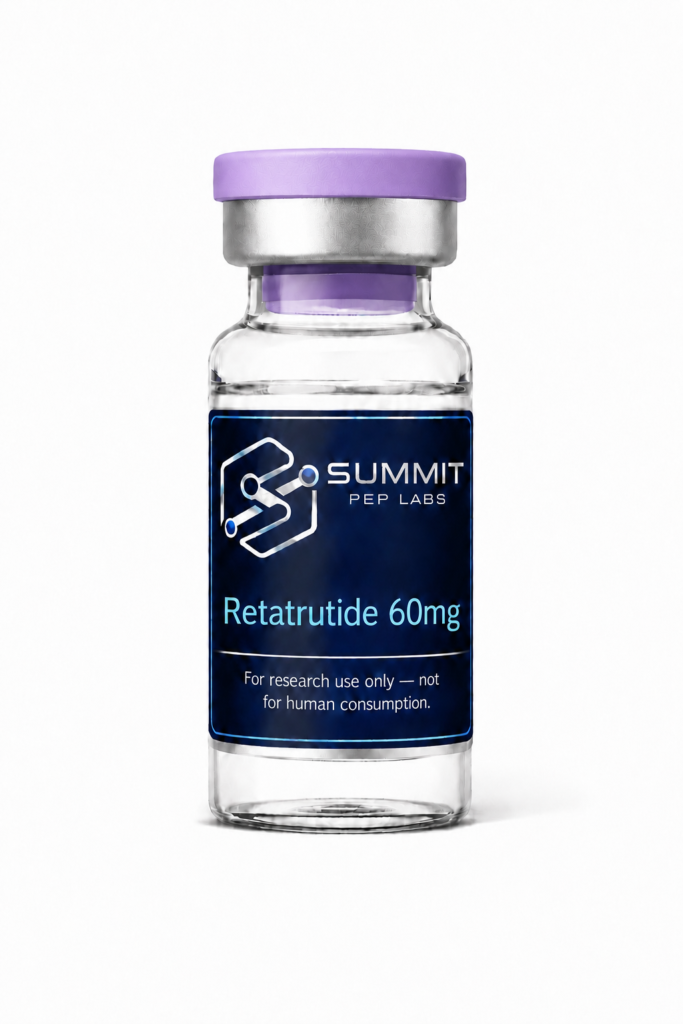
🧬 Research Peptides vs SARMs: Understanding the Differences
Research Use Only
The information in this article is provided for educational purposes only. All products sold by Summit Pep Labs are intended strictly for laboratory research and are not for human consumption.
Introduction
As interest in peptide science and performance-related research continues to grow, researchers frequently compare research peptides and Selective Androgen Receptor Modulators (SARMs). Although both categories are commonly discussed within scientific communities, they are fundamentally different in their structure, biological targets, and areas of investigation.
Understanding these differences can help researchers select the appropriate compounds for their laboratory models and better interpret the growing body of peptide and metabolic research.
In this guide, we’ll explain what peptides and SARMs are, how they differ, and why peptides continue to gain popularity in modern scientific research.
📊 Peptides vs SARMs at a Glance
| Feature | Research Peptides | SARMs |
|---|---|---|
| 🧬 Molecular Type | Short chains of amino acids | Small synthetic molecules |
| 🎯 Primary Target | Specific receptors, hormones, or signaling pathways | Androgen receptors |
| 🔬 Common Research Areas | Metabolism, recovery, longevity, cellular signaling | Muscle physiology, bone biology, androgen signaling |
| ⚙️ Mechanism | Mimic naturally occurring peptides | Selectively activate androgen receptors |
| 🧪 Examples | Retatrutide, MOTS-C, Tesamorelin, BPC-157, GHK-Cu | Ostarine (MK-2866), Ligandrol (LGD-4033), RAD-140 |
🔬 What Are Research Peptides?
Research peptides are short chains of amino acids designed to interact with specific biological pathways. Many peptides are modeled after naturally occurring signaling molecules found in the body, making them valuable tools for laboratory investigations.
Researchers study peptides across a wide variety of scientific fields, including:
- ⚡ Cellular energy metabolism
- 🧬 Growth hormone signaling
- 🔋 Mitochondrial biology
- 🧠 Neurobiology
- 🩹 Tissue repair models
- 📊 Body composition research
- 🧪 Endocrine signaling
Examples of commonly studied research peptides include:
- Retatrutide
- MOTS-C
- Tesamorelin
- CJC-1295
- Ipamorelin
- GHK-Cu
- BPC-157
- TB-500
Each peptide targets different receptors or signaling pathways, which is why peptide research has expanded so rapidly over the past decade.
💪 What Are SARMs?
Selective Androgen Receptor Modulators (SARMs) are synthetic compounds designed to selectively activate androgen receptors.
Researchers have investigated SARMs primarily for:
- Muscle physiology
- Bone metabolism
- Androgen receptor biology
- Age-related muscle loss models
Unlike peptides, SARMs are not amino acid chains and function through an entirely different mechanism.
🧪 Key Differences
🧬 Structure
Peptides are composed of amino acids, while SARMs are synthetic non-peptide molecules.
🎯 Biological Targets
Peptides may interact with growth hormone receptors, GLP-1 receptors, GIP receptors, glucagon receptors, mitochondrial pathways, or other signaling systems depending on the compound.
SARMs primarily target androgen receptors.
🔬 Research Applications
Peptides are investigated across many scientific disciplines, including:
- Longevity science
- Cellular metabolism
- Recovery biology
- Hormone signaling
- Neurobiology
- Metabolic disease research
SARMs are generally studied within androgen-related physiology and muscle biology.
🌟 Why Peptide Research Continues to Grow
Interest in peptides has expanded because researchers continue identifying new signaling molecules involved in complex biological processes.
Modern peptide research now includes investigations into:
- Mitochondrial function
- Healthy aging
- Appetite regulation
- Growth hormone physiology
- Skin biology
- Cellular communication
- Energy metabolism
Compounds such as Retatrutide and MOTS-C have contributed to growing interest in peptide science due to their novel mechanisms of action.
📦 Choosing High-Quality Research Peptides
Researchers often look for suppliers that provide:
- ✅ High-purity research compounds
- ✅ Batch-specific Certificates of Analysis (COAs)
- ✅ HPLC analytical testing
- ✅ Secure packaging
- ✅ Reliable customer support
- ✅ Fast shipping
Quality documentation helps support confidence in laboratory research materials.
❓ Frequently Asked Questions
Are peptides and SARMs the same?
No. Peptides are amino acid chains that interact with specific biological pathways, while SARMs are synthetic molecules that target androgen receptors.
Which has more research applications?
Peptides are currently studied across a broader range of scientific fields, including metabolism, endocrinology, mitochondrial biology, neurobiology, and longevity research.
Are research peptides anabolic steroids?
No. Research peptides and anabolic steroids are different classes of compounds with distinct molecular structures and mechanisms.
Why are peptides becoming more popular?
Researchers continue discovering new peptide signaling pathways involved in metabolism, recovery, healthy aging, and cellular communication, leading to increased scientific interest.
📚 References
- Fosgerau K, Hoffmann T. Peptide therapeutics: current status and future directions. Drug Discovery Today. 2015.
- Usami M, et al. Selective Androgen Receptor Modulators: Current Knowledge and Clinical Applications. Journal of Clinical Medicine.
Final Thoughts
Although research peptides and SARMs are often mentioned together, they represent two distinct categories of research compounds with different biological targets and scientific applications.
As peptide science continues to evolve, researchers are exploring an expanding range of compounds involved in metabolism, cellular signaling, mitochondrial biology, and endocrine regulation. Understanding these differences allows laboratories to select research materials that best align with their study objectives.