❄️ Why Are Research Peptides Lyophilized?
Understanding Freeze-Drying and Why It Matters for Peptide Stability
Research Use Only
Research peptides are intended strictly for laboratory research. This article is provided for educational purposes and discusses lyophilization, a standard manufacturing process used in peptide and pharmaceutical research. Products offered by Summit Pep Labs are not intended for human consumption and are not intended to diagnose, treat, cure, or prevent any disease.
🔬 Introduction
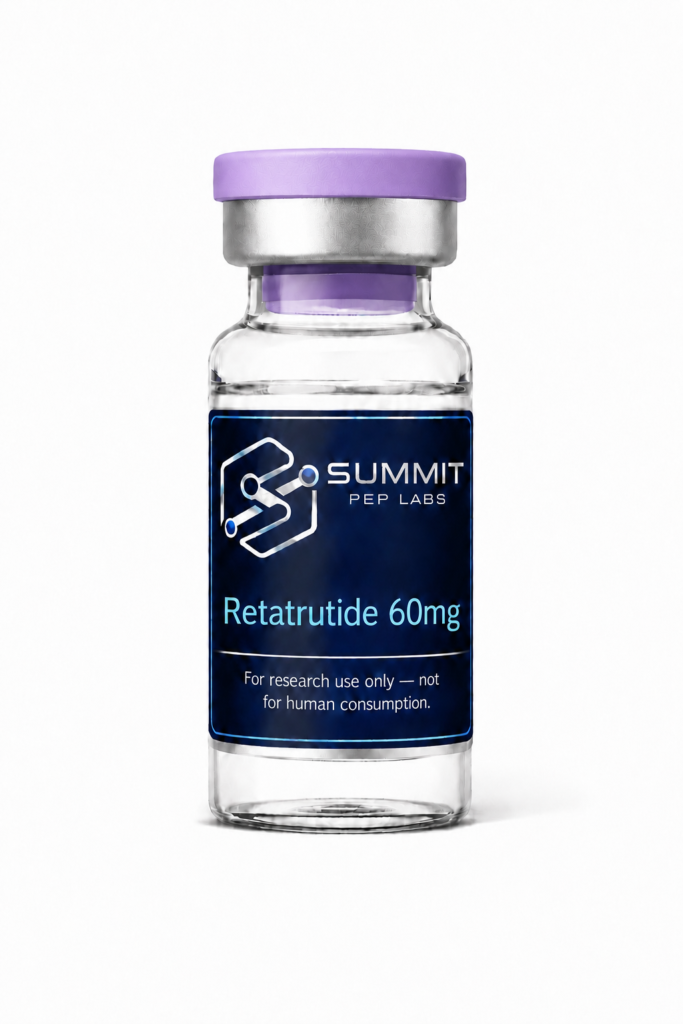
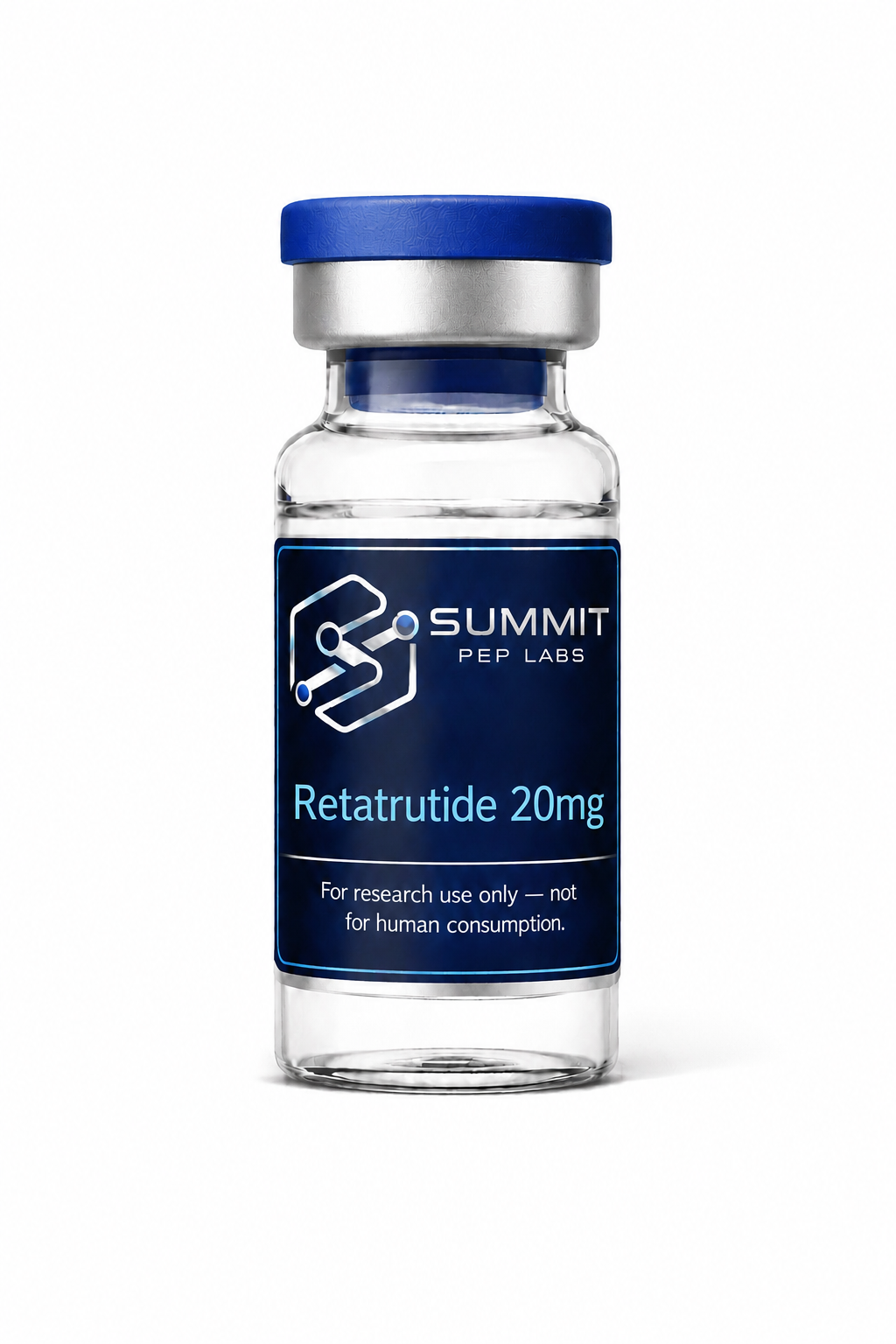
If you’ve ever purchased a research peptide, you’ve likely noticed that it arrives as a white powder rather than a liquid solution.
This isn’t accidental.
Most research peptides—including Retatrutide, BPC-157, TB-500, Tesamorelin, CJC-1295, MOTS-c, GHK-Cu, and NAD+—are supplied in a lyophilized (freeze-dried) form.
But why?
Lyophilization is one of the most important processes used in peptide manufacturing because it helps improve stability during storage and shipping while preserving the compound until it is prepared for laboratory use.
This guide explains:
- ❄️ What lyophilization is
- 🧪 Why peptides are freeze-dried
- 📦 Storage advantages
- 🧬 How reconstitution works
- 🔬 Why researchers prefer lyophilized peptides
📊 Lyophilization at a Glance
| Feature | Description |
|---|---|
| Also Known As | Freeze-drying |
| Purpose | Improve stability and shelf life |
| Used For | Peptides, biologics, vaccines, pharmaceuticals |
| Appearance | White or off-white powder (lyophilized cake) |
| Reconstitution | Sterile bacteriostatic water or laboratory-grade sterile water |
❄️ What Is Lyophilization?
Lyophilization—commonly called freeze-drying—is a preservation process that removes water from a product while maintaining its structural integrity.
Unlike traditional drying methods, lyophilization removes moisture under low temperature and vacuum conditions, minimizing thermal stress on delicate biological compounds.
This process is widely used throughout:
- Pharmaceutical manufacturing
- Biotechnology
- Vaccine production
- Peptide research
- Diagnostic laboratories
Because peptides are sensitive molecules, freeze-drying helps maintain their stability before use in laboratory settings.
⚙️ How Does Lyophilization Work?
The process typically occurs in three stages:
🧊 1. Freezing
The peptide solution is frozen to very low temperatures, causing the water within the solution to solidify.
💨 2. Primary Drying (Sublimation)
Under vacuum conditions, the frozen water transitions directly from ice to vapor without becoming liquid.
This removes the majority of the water while helping preserve the peptide’s structure.
🌬️ 3. Secondary Drying
Residual moisture is removed to further improve long-term stability.
The finished product becomes the familiar white lyophilized powder found inside research peptide vials.
🧬 Why Researchers Prefer Lyophilized Peptides
Water is one of the primary factors contributing to peptide degradation.
Removing moisture helps improve storage stability by reducing:
- Hydrolysis
- Chemical degradation
- Microbial growth
- Oxidative reactions
For this reason, many peptide manufacturers supply compounds in lyophilized form until they are ready for laboratory preparation.
📦 Benefits of Lyophilization
Researchers value freeze-dried peptides for several reasons.
✅ Improved Stability
Removing water helps preserve peptide integrity during storage.
🚚 Easier Shipping
Lyophilized peptides are generally easier to transport than pre-mixed liquid formulations.
🧪 Flexible Reconstitution
Researchers can prepare solutions at concentrations appropriate for their experimental protocols.
❄️ Longer Storage Potential
Properly stored lyophilized peptides generally maintain stability longer than comparable aqueous solutions.
💧 What Is Reconstitution?
Before laboratory use, researchers commonly reconstitute lyophilized peptides using sterile bacteriostatic water or another appropriate laboratory-grade diluent.
For example:
A 10 mg peptide reconstituted with 2 mL of bacteriostatic water results in:
5 mg/mL
The appropriate concentration depends on the design of each research protocol.
🧊 Storage Recommendations
Researchers commonly recommend:
- Refrigerating peptides after reconstitution
- Protecting vials from excessive heat
- Avoiding prolonged light exposure
- Using sterile handling techniques
- Limiting repeated freeze-thaw cycles
Following proper storage procedures may help preserve peptide stability throughout laboratory investigations.
🧪 Which Peptides Are Commonly Lyophilized?
Many research compounds are supplied in freeze-dried form, including:
- 🧬 Retatrutide
- 💙 Tesamorelin
- ⚡ CJC-1295
- 🌱 BPC-157
- 🔬 TB-500
- 🔋 MOTS-c
- 🧪 GHK-Cu
- ⚙️ NAD+
Lyophilization has become the industry standard for many peptide products due to its ability to improve storage and handling characteristics.
❓ Frequently Asked Questions
What does lyophilized mean?
Lyophilized means a product has been freeze-dried to remove water while preserving its structural integrity.
Why aren’t peptides sold as liquids?
Many peptides are more stable when stored without water. Lyophilization helps improve stability during storage and transportation until the product is reconstituted for laboratory use.
Does lyophilization affect peptide purity?
No. Lyophilization is a preservation process and is separate from analytical testing methods such as HPLC. Purity is typically verified through laboratory testing and documented on a Certificate of Analysis (COA).
What is the white powder inside my peptide vial?
The white or off-white material is the lyophilized peptide, produced through the freeze-drying process.
Do all research peptides require reconstitution?
Many lyophilized peptides require reconstitution before laboratory use, although preparation methods vary depending on the research protocol.
📚 Selected References
- Wang W. Lyophilization and Development of Solid Protein Pharmaceuticals. International Journal of Pharmaceutics.
- Tang XC, Pikal MJ. Design of Freeze-Drying Processes for Pharmaceuticals. Pharmaceutical Research.
🏁 Final Thoughts
Lyophilization is a cornerstone of modern peptide manufacturing because it helps preserve sensitive compounds by removing water under carefully controlled conditions. This process improves storage stability, simplifies transportation, and allows researchers to prepare solutions tailored to their experimental needs.
Understanding how and why peptides are lyophilized provides valuable context for interpreting Certificates of Analysis, planning reconstitution procedures, and selecting high-quality research materials. At Summit Pep Labs, we believe educating researchers about the science behind peptide manufacturing is just as important as providing research-grade compounds.