🧪 Peptide Shelf Life: How Long Do Lyophilized Research Peptides Last?
Research Use Only
The information in this article is intended for educational purposes only and discusses general laboratory storage practices for research peptides. Products sold by Summit Pep Labs are intended strictly for laboratory research and are not approved for human consumption.
🔬 Introduction
One of the most common questions researchers ask after purchasing a research peptide is:
“How long do lyophilized peptides last?”
The answer depends on several factors, including storage conditions, whether the peptide has been reconstituted, and the specific characteristics of the compound being studied.
Proper handling and storage play an important role in preserving peptide stability throughout the research process. This guide explains what researchers should know about peptide shelf life, storage recommendations, and factors that may affect long-term stability.
📊 Peptide Shelf Life at a Glance
| Condition | General Consideration |
|---|---|
| Lyophilized (freeze-dried) | Typically more stable than liquid solutions when stored properly |
| Reconstituted | Generally less stable than lyophilized peptides |
| Heat Exposure | May accelerate degradation |
| Moisture | Can reduce stability over time |
| Light Exposure | May affect certain compounds |
| Repeated Freeze-Thaw Cycles | Best minimized whenever possible |
❄️ Why Are Peptides Lyophilized?
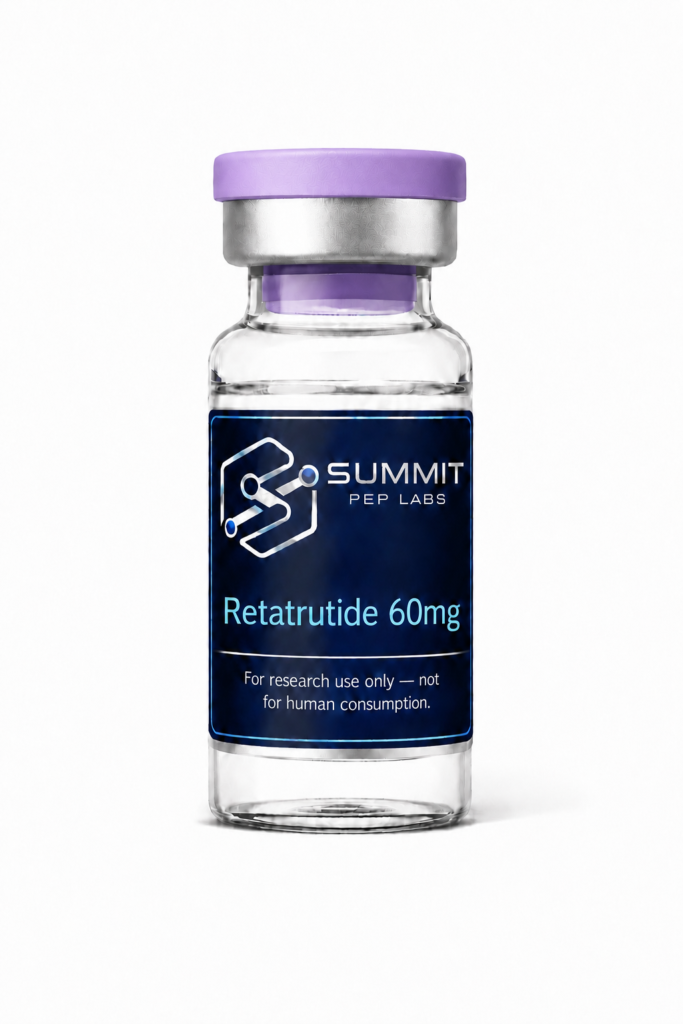
Most research peptides are supplied as a white, freeze-dried powder through a process called lyophilization.
Removing water helps improve stability by reducing:
- 💧 Hydrolysis
- 🦠 Microbial growth
- ⚗️ Chemical degradation
- 🌡️ Heat-related deterioration
This is why lyophilization has become the standard format for many research peptides.
🧬 Factors That Affect Peptide Stability
No single shelf-life estimate applies to every peptide. Stability depends on several variables.
🌡️ Temperature
Cool, consistent temperatures generally help maintain peptide integrity.
💦 Moisture
Water can contribute to degradation over time, which is why lyophilized peptides are typically stored dry until needed for laboratory preparation.
☀️ Light
Some peptides may be sensitive to prolonged exposure to direct light. Researchers commonly store vials in their original packaging or other light-protective containers.
🧪 Handling
Maintaining clean laboratory techniques and minimizing contamination are important practices during peptide handling and reconstitution.
💧 What Happens After Reconstitution?
Once a lyophilized peptide has been reconstituted with an appropriate laboratory-grade diluent, researchers generally recommend refrigerated storage and careful handling.
Compared with the freeze-dried form, reconstituted peptides are typically more susceptible to degradation over time.
Because stability varies by compound, researchers should consult available documentation and design their protocols accordingly.
📦 Storage Best Practices
Researchers commonly recommend:
- ❄️ Store lyophilized peptides in cool, dry conditions.
- 🧊 Refrigerate after reconstitution when appropriate.
- 🌑 Protect vials from excessive light.
- 🧼 Use sterile handling techniques.
- 🔄 Avoid repeated freeze-thaw cycles whenever possible.
Following consistent storage practices may help preserve peptide quality throughout laboratory investigations.
📄 Why Certificates of Analysis Matter
While storage is important, product quality begins before storage.
Researchers often review Certificates of Analysis (COAs) to verify:
- Batch identification
- Analytical purity
- HPLC testing results
- Testing dates
COAs provide transparency regarding the analytical testing performed on a specific batch.
❓ Frequently Asked Questions
Do lyophilized peptides last longer than liquid peptides?
In general, lyophilized peptides are considered more stable during storage because water has been removed through the freeze-drying process.
Should peptides be refrigerated?
Many researchers refrigerate peptides after reconstitution and store lyophilized products under cool, stable conditions until needed.
Does freezing improve peptide stability?
Storage recommendations vary depending on the specific peptide and laboratory protocol. Researchers should follow appropriate handling practices for the compound being studied.
Can heat damage research peptides?
Excessive heat may contribute to peptide degradation, which is why cool storage conditions are commonly recommended.
Does every peptide have the same shelf life?
No. Stability can vary depending on peptide sequence, formulation, storage conditions, and handling practices.
📚 Selected References
- Tang XC, Pikal MJ. Design of Freeze-Drying Processes for Pharmaceuticals. Pharmaceutical Research.
- Wang W. Lyophilization and Development of Solid Protein Pharmaceuticals. International Journal of Pharmaceutics.
🏁 Final Thoughts
Proper storage is an important part of maintaining the quality of research peptides. Lyophilization, careful handling, and appropriate storage conditions all contribute to preserving peptide stability before and after reconstitution.
Researchers should review available Certificates of Analysis, follow laboratory best practices, and consult relevant documentation for each peptide being studied.