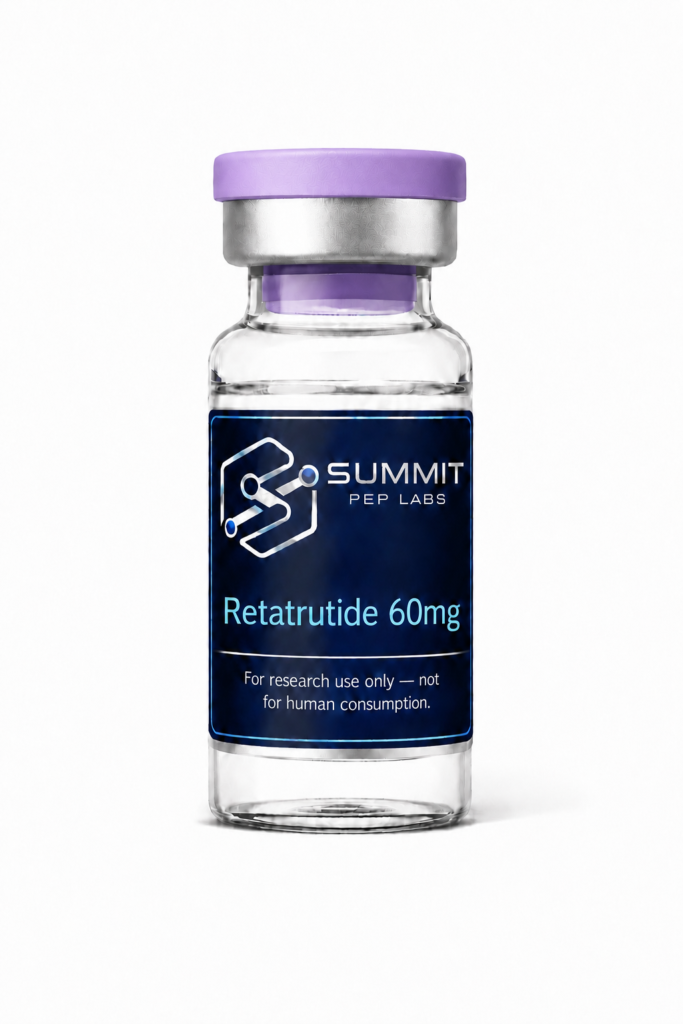
Retatrutide Phase 3 Results: What Eli Lilly’s TRIUMPH-4 Trial Means for the Future of Obesity Treatment and the Peptide Industry
The obesity and peptide therapeutics space may have just crossed a major turning point. In late 2025, Eli Lilly released topline data from the first successful Phase 3 trial of retatrutide, its investigational “triple agonist” peptide therapy. The results were historic: participants lost up to 28.7% of their body weight over 68 weeks, one of the largest weight-loss outcomes ever reported in a late-stage obesity trial.
For the peptide industry, these findings are more than just another GLP-1 headline. They represent a potential evolution beyond semaglutide and tirzepatide into a new generation of multi-receptor metabolic therapies that could reshape obesity treatment, cardiometabolic medicine, and even the broader research peptide market.
What Is Retatrutide?
Retatrutide (LY3437943) is an investigational peptide developed by Eli Lilly that activates three different hormone receptors simultaneously:
- GLP-1 receptor
- GIP receptor
- Glucagon receptor
This is why retatrutide is often referred to as a “triple agonist.”
Most currently approved obesity medications target only one or two of these pathways. Semaglutide primarily targets GLP-1, while tirzepatide targets both GLP-1 and GIP. Retatrutide adds glucagon receptor activity, which researchers believe may further enhance fat metabolism and energy expenditure.
The goal is not simply appetite suppression, but broader metabolic optimization.
What Does “Phase 3 Trial” Mean?
Clinical drug development generally progresses through several stages:
- Phase 1 — Safety testing in small groups
- Phase 2 — Early efficacy and dosing studies
- Phase 3 — Large-scale trials designed to confirm effectiveness and monitor safety
- FDA Review and Approval
- Phase 4 — Post-marketing surveillance
Phase 3 is considered the most critical step before regulatory approval. These trials involve hundreds or thousands of participants and are designed to determine whether a treatment truly works at scale while maintaining an acceptable safety profile.
For obesity therapeutics, Phase 3 trials are especially important because regulators want to see:
- Long-term weight loss sustainability
- Cardiovascular safety
- Real-world tolerability
- Effects on obesity-related conditions such as diabetes, sleep apnea, and osteoarthritis
Retatrutide’s Phase 3 program, called TRIUMPH, includes multiple large-scale studies across different patient populations.
What Is TRIUMPH-4?
TRIUMPH-4 is the first Phase 3 retatrutide trial to report positive results publicly. The study evaluated adults with obesity or overweight who also suffered from knee osteoarthritis but did not have type 2 diabetes.
The trial lasted 68 weeks and tested weekly injections of retatrutide at:
- 9 mg
- 12 mg
- Placebo
The results were extraordinary.
Weight Loss Results
Participants receiving the 12 mg dose achieved:
28.7\%\ \text{mean body weight reduction at 68 weeks}
The 9 mg group achieved:
- 26.4% average weight reduction
The placebo group:
- 2.1% average weight reduction
According to Lilly, the highest-dose group lost an average of approximately 71.2 pounds.
To put that into perspective:
- Semaglutide (Wegovy) reported around 14.9% weight loss in STEP-1
- Tirzepatide (Zepbound) reported around 22.5% in SURMOUNT-1
- Retatrutide reached 28.7% in TRIUMPH-4
More Than Weight Loss
One of the most important aspects of TRIUMPH-4 was that it demonstrated improvements beyond body composition alone.
Researchers reported:
- Significant reductions in osteoarthritis pain
- Improved physical function
- Improvements in metabolic markers
- Potential cardiovascular benefits
- High rates of prediabetes reversal
The osteoarthritis findings were especially notable. Participants experienced approximately 75.8% reductions in WOMAC pain scores, a standard measurement used in osteoarthritis studies.
This suggests that advanced metabolic peptides may eventually play roles far beyond cosmetic weight loss.
Why the Peptide Industry Is Paying Attention
The peptide space has already exploded in popularity due to compounds like semaglutide and tirzepatide. Retatrutide may accelerate that trend dramatically.
Here’s why.
1. Triple Agonists May Become the New Standard
Retatrutide’s results suggest that future obesity therapies may move toward increasingly sophisticated multi-pathway peptides.
The progression has been rapid:
- First-generation GLP-1 agonists
- Dual agonists (GLP-1/GIP)
- Triple agonists (GLP-1/GIP/glucagon)
If these results continue to hold across additional Phase 3 trials, the industry may begin shifting toward combination metabolic signaling rather than single-receptor targeting.
2. Obesity Medicine Is Expanding Into Full Metabolic Therapy
Modern obesity treatment is no longer viewed purely as weight reduction.
Companies are now targeting:
- Cardiovascular disease
- Sleep apnea
- Fatty liver disease
- Osteoarthritis
- Diabetes prevention
- Inflammation
The TRIUMPH program itself includes studies focused on cardiovascular outcomes and obstructive sleep apnea.
That broadens the commercial and scientific significance of peptide therapeutics enormously.
3. Research Peptide Demand Will Likely Continue Growing
As mainstream awareness increases around metabolic peptides, interest in the broader peptide space continues expanding among:
- Researchers
- Pharmaceutical developers
- Biotechnology startups
- Longevity communities
- Fitness and wellness markets
Compounds such as:
- Retatrutide
- Tirzepatide
- Semaglutide
- Cagrilintide
- GIP analogs
are increasingly driving innovation throughout the industry.
However, it is important to note that retatrutide remains investigational and is not FDA approved as of May 2026.
Safety and Tolerability
Despite the excitement, retatrutide is not without concerns.
The most commonly reported adverse events were gastrointestinal, including:
- Nausea
- Vomiting
- Diarrhea
- GI discomfort
Higher doses generally produced stronger effects but also higher dropout rates.
This is one reason Lilly is also investigating lower maintenance doses in the broader TRIUMPH program.
Long-term cardiovascular outcome data are still being collected through additional trials.
What Happens Next?
TRIUMPH-4 was only the first major Phase 3 readout.
Additional trials expected to report data include:
- TRIUMPH-1
- TRIUMPH-2
- TRIUMPH-3
- TRIUMPH-5
- TRIUMPH-CVOT
These studies will evaluate retatrutide in broader obesity populations, diabetes patients, cardiovascular disease populations, and long-term outcomes.
If results remain strong across the program, many analysts expect retatrutide to become one of the most commercially significant peptide therapeutics ever developed.
Final Thoughts
Retatrutide’s Phase 3 TRIUMPH-4 results may represent a defining moment for the obesity and peptide therapeutics landscape.
A nearly 29% average weight reduction in a large late-stage clinical trial is not just incremental progress — it signals a potential paradigm shift in metabolic medicine. Beyond obesity itself, these findings suggest future peptide therapies may address inflammation, cardiovascular risk, osteoarthritis, and broader metabolic dysfunction simultaneously.
For the peptide industry, the implications are enormous:
- Increased pharmaceutical investment
- Accelerated peptide innovation
- Greater public awareness
- Expansion of metabolic research
- New generations of multi-pathway therapeutics
The peptide era is no longer emerging. It is rapidly becoming one of the dominant frontiers in modern medicine.