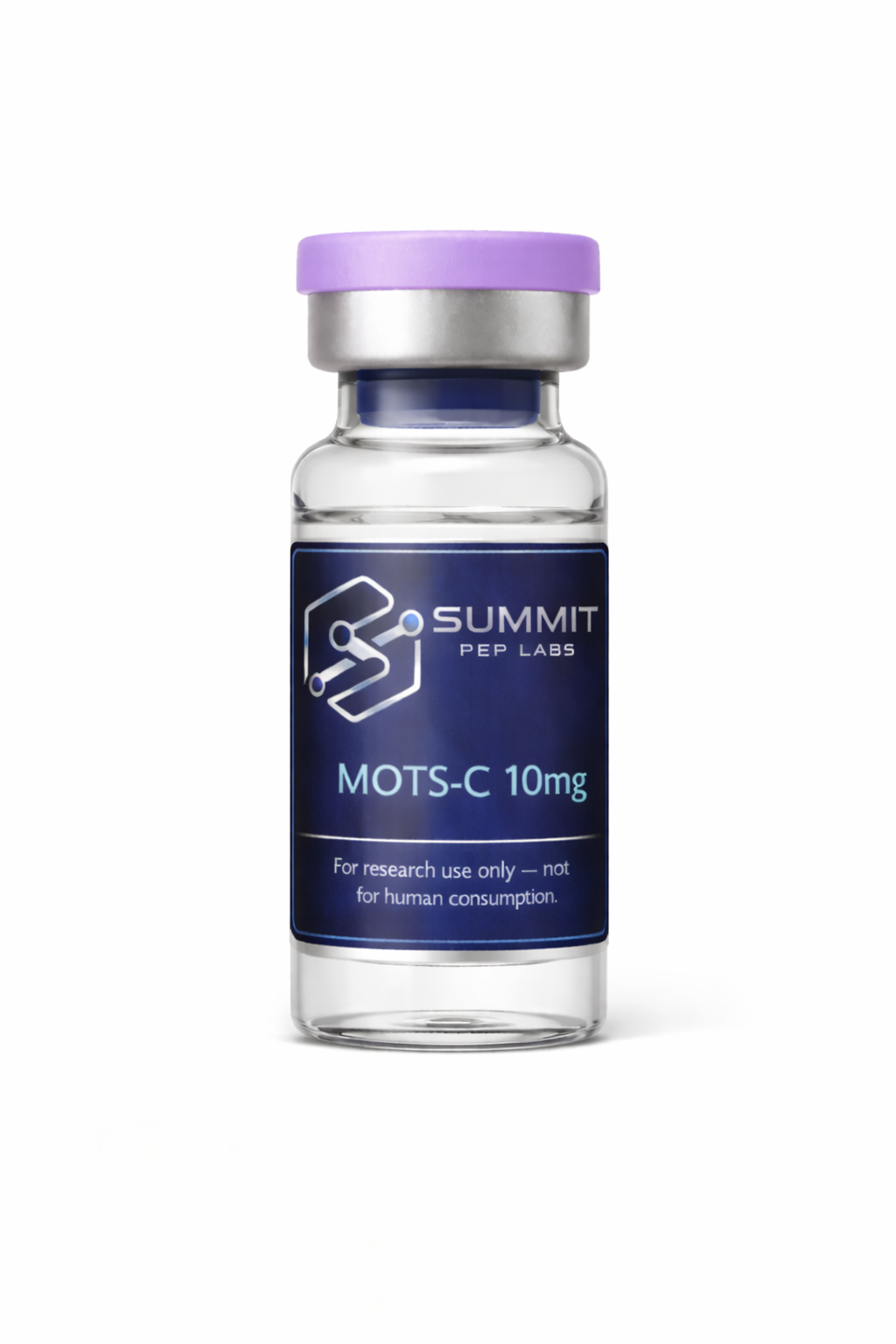
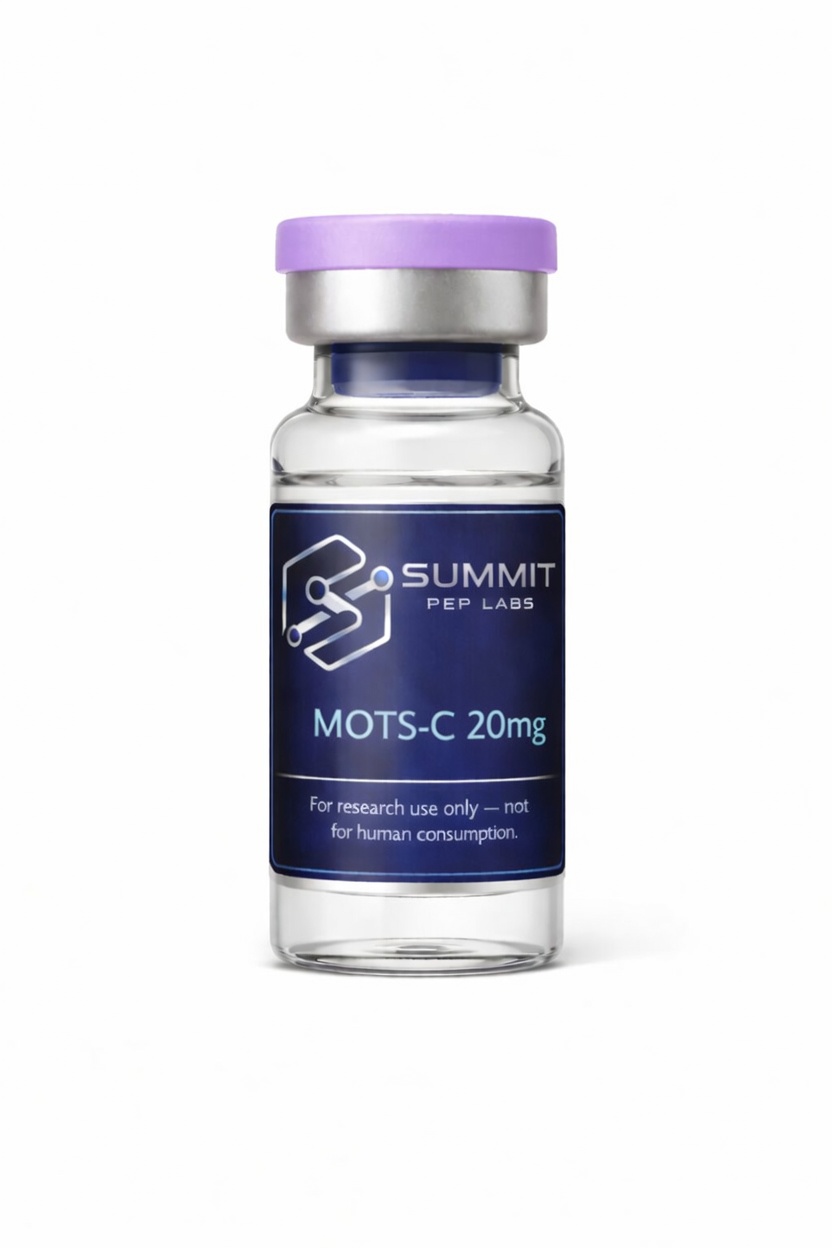
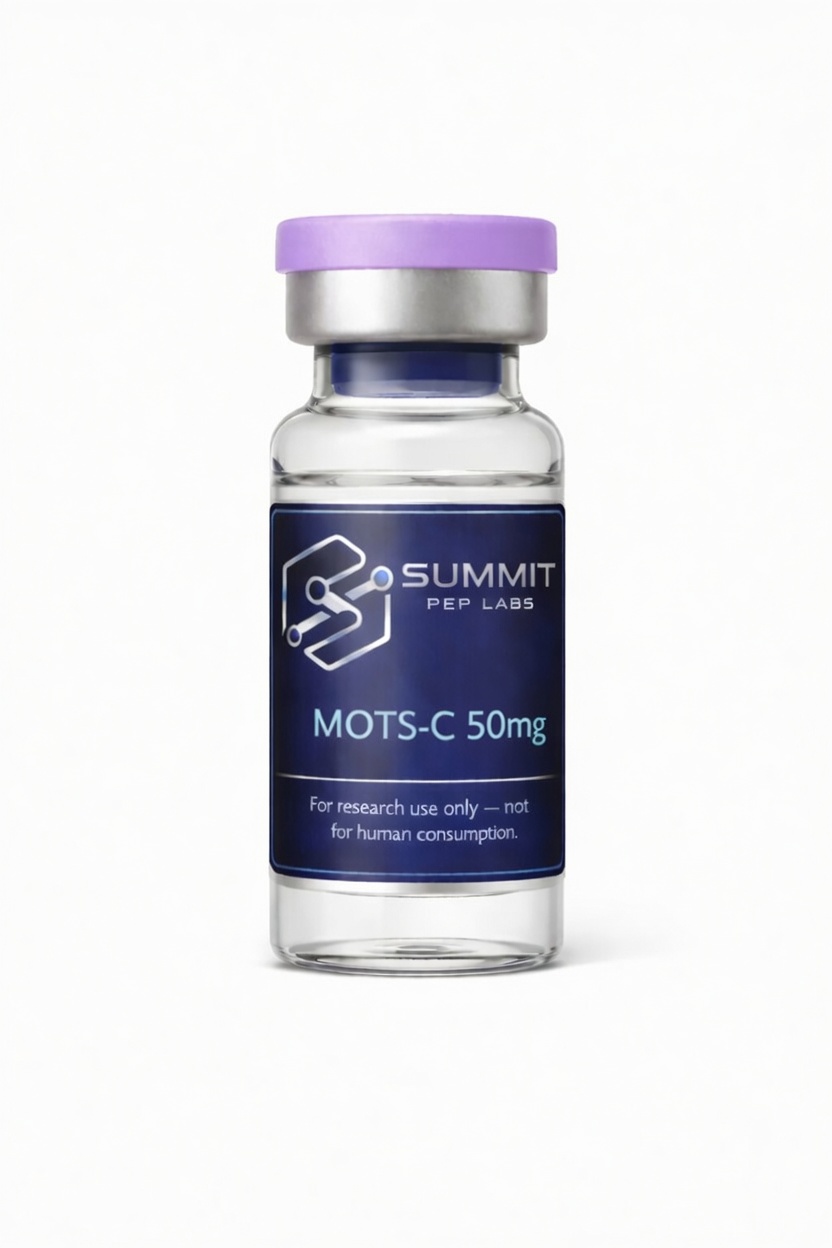
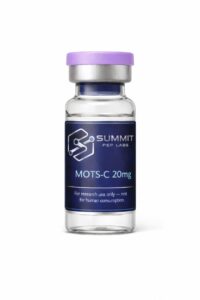
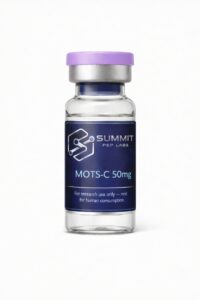
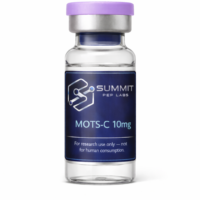
MOTS-C 10mg | 20mg | 50mg
MOTS-c Peptide (RUO) | High Purity ≥99% | Research Grade
Product Specifications
| Specification | Details |
|---|---|
| Product Name | MOTS-c (Mitochondrial ORF of the 12S rRNA Type-C) |
| Peptide Type | Mitochondrial-Derived Peptide (MDP) — 16 Amino Acids |
| Encoding Region | 12S rRNA Region of Mitochondrial DNA |
| Molecular Weight | ~1.7 kDa |
| Purity | ≥99% (HPLC Verified) |
| Form | Lyophilized Powder |
| Solubility | Sterile Water or PBS |
| Storage | −20°C, Protected from Light and Moisture |
What Is MOTS-c?
MOTS-c (Mitochondrial ORF of the 12S rRNA Type-C) is a 16-amino acid mitochondrial-derived peptide (MDP) encoded directly by the 12S rRNA region of mitochondrial DNA, and is supplied exclusively for laboratory and preclinical research applications. Unlike most bioactive peptides encoded by nuclear DNA, MOTS-c originates from the mitochondrial genome — a distinction that makes it a scientifically unique tool for studying mitochondrial-to-nuclear communication and energy-sensing biology.
MOTS-c is widely referenced in metabolic and aging research literature for its characterized role in cellular stress response, AMPK pathway activation, and glucose and lipid metabolism regulation in experimental models. A defining research feature is its reported translocation from the mitochondria to the nucleus under metabolic stress conditions, where it appears to influence gene expression linked to metabolism, antioxidant defense, and cellular protection.
Manufactured under controlled conditions and supplied in lyophilized form, MOTS-c is commonly utilized by qualified researchers requiring high-purity, batch-consistent materials for controlled experimental studies.
This product is clearly labeled and distributed strictly as a Research Use Only (RUO) material and is not approved for human or veterinary use.
Experimental Research Applications
In scientific literature, MOTS-c has been investigated in a variety of experimental settings, including:
- AMPK energy-sensing pathway activation research
- Glucose uptake and insulin resistance models in skeletal muscle
- Lipid oxidation and metabolic flexibility studies
- Mitochondrial-to-nuclear peptide signaling research
- Age-related metabolic decline and geroscience models
- Exercise physiology and skeletal muscle performance research
- High-fat diet and nutrient stress adaptation studies
- Oxidative stress and antioxidant defense pathway investigations
- Comparative mitochondrial-derived peptide research (humanin, SHLPs, MOTS-c)
These studies are conducted exclusively within laboratory and preclinical environments and are intended for mechanistic and observational research purposes.
Purity and Quality Control
Each batch of MOTS-c undergoes analytical testing to ensure:
✔ ≥99% purity verified by HPLC
✔ Batch-to-batch consistency
✔ Professional documentation and traceability
✔ Controlled manufacturing standards
✔ Reliable performance for repeatable research applications
High analytical purity and strict quality control procedures help provide researchers with confidence in the consistency and reliability of each batch.
Key Research Features
- Mitochondrial-encoded peptide — rare non-nuclear origin
- 16-amino acid sequence, ~1.7 kDa
- AMPK pathway activation in experimental models
- Reported mitochondrial-to-nuclear translocation under metabolic stress
- ≥99% HPLC-verified purity
- Lyophilized powder format
- Soluble in sterile water or PBS
- Suitable for in vitro and preclinical research
- Batch-tested for consistency
- Research-grade manufacturing standards
- Professionally labeled and documented
Storage Recommendations
To maintain product stability and research integrity, MOTS-c should be:
- Stored at −20°C in a tightly sealed container
- Protected from light and moisture
- Kept sealed until use
- Handled according to standard laboratory procedures
- Not subjected to repeated freeze-thaw cycles
Toxicology and Regulatory Information
- Evaluated in preclinical metabolic, aging, and mitochondrial signaling research models
- Endogenous peptide levels reported to decline naturally with age in both animal and human tissue samples
- No FDA-approved MOTS-c drug or therapeutic product exists
- Supplied strictly as a Research Use Only (RUO) material
Why Choose Summit Pep Labs?
At Summit Pep Labs, we are committed to supplying researchers with premium-quality compounds manufactured to rigorous analytical standards.
Why Researchers Choose Summit Pep Labs
- ≥99% HPLC-verified purity
- Batch consistency and traceability
- Professional labeling and packaging
- Research-grade manufacturing standards
- Secure shipping and quality assurance
- Commitment to reproducibility and reliability
Frequently Asked Questions
What is MOTS-c?
MOTS-c is a 16-amino acid peptide encoded by the 12S rRNA region of mitochondrial DNA, commonly referenced in scientific literature for AMPK signaling, glucose and lipid metabolism, mitochondrial-to-nuclear communication, and age-related metabolic research in laboratory and preclinical models.
Is MOTS-c approved for human use?
No. MOTS-c is not approved by the FDA for human or veterinary use. It is supplied exclusively for research purposes.
What purity does Summit Pep Labs provide?
Each batch of MOTS-c is tested and verified to contain ≥99% purity using HPLC analytical methods.
How is MOTS-c supplied?
MOTS-c is supplied as a lyophilized powder and packaged according to professional research standards.
How should MOTS-c be stored?
For optimal stability and research integrity, MOTS-c should be stored at −20°C in a tightly sealed container, protected from light and moisture, and not subjected to repeated freeze-thaw cycles.
Why is MOTS-c relevant to aging research?
Endogenous MOTS-c levels are reported to decline naturally with age in animal and human tissue samples. Laboratory models have recorded improvements in exercise tolerance, muscle performance, and metabolic balance following MOTS-c exposure under controlled conditions, making it a practical tool for geroscience and longevity research.
Is MOTS-c a hormone?
No. MOTS-c is a mitochondrial-derived signaling peptide, not a hormone. It functions as an intracellular and intercellular messenger that responds to metabolic stress conditions rather than acting through classical endocrine mechanisms.
How does MOTS-c relate to other mitochondrial-derived peptides?
MOTS-c belongs to a family of mitochondrial-derived peptides (MDPs) that also includes humanin and the SHLP family. Together these molecules indicate that mitochondria engage in complex intercellular communication beyond their classical role in energy production — an active area of investigation in mitochondrial biology and aging research.
References
- Lee C et al. Mitochondrial-derived peptides and systemic metabolic regulation. Cell Metabolism
- Reynolds J, Kim S. Exercise-linked benefits of MOTS-c in skeletal muscle physiology. J Mol Endocrinol
- Xu H. Age-related decline of MOTS-c levels in tissue samples. Geroscience Reports
- Patel A. AMPK activation and glucose transport signaling in MOTS-c models. Metabolic Pathway Reviews
- Ross M, Tanaka T. Mitochondrial-to-nuclear peptide signaling under metabolic stress. Front Cell Biol
- Olson F. MOTS-c in high-fat diet adaptation and fatty acid oxidation. Nutrient Biochemistry Journal
- Griffin P. Comparative study of humanin, MOTS-c, and SHLP families. Mitochondrial Research Review
- National Center for Biotechnology Information (NCBI)
- U.S. Food and Drug Administration (FDA)
Research Use Only Disclaimer
For Research Use Only (RUO).
This product is intended strictly for laboratory and scientific research purposes. It is not intended for human consumption, veterinary use, cosmetic applications, therapeutic use, or diagnostic purposes.
By purchasing this product, customers acknowledge that they are qualified researchers and agree to use these materials in accordance with all applicable laws and regulations.
These statements have not been evaluated by the Food and Drug Administration. This product is not intended to diagnose, treat, cure, or prevent any disease.


Reviews
There are no reviews yet.