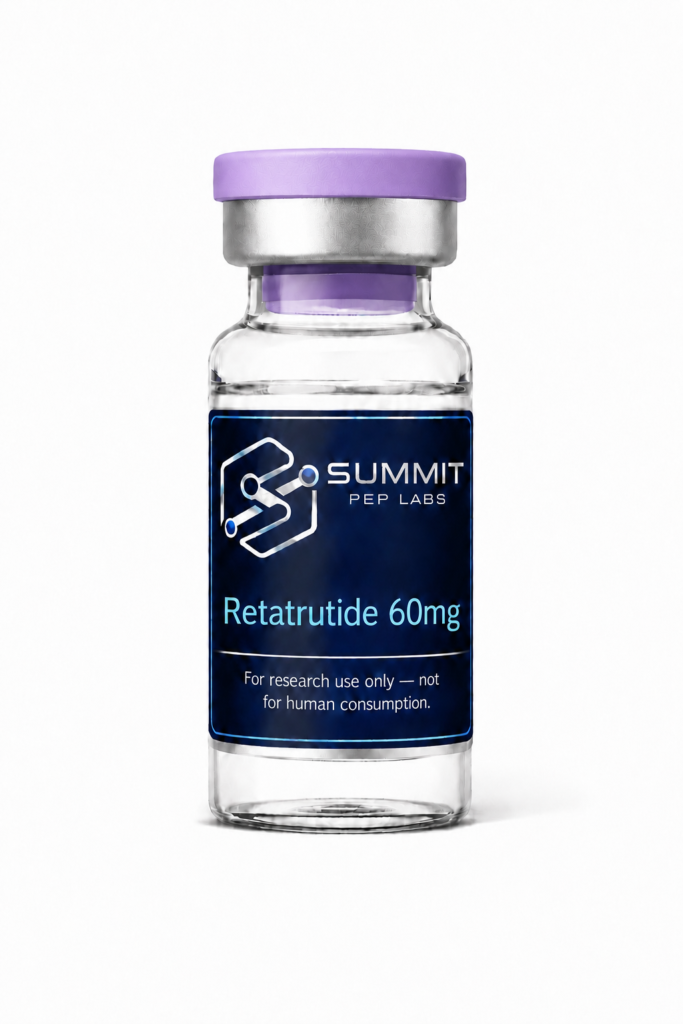
🧬 Retatrutide and Metabolic Flexibility
Why Researchers Continue Studying This Next-Generation Triple Agonist
Research Use Only
Retatrutide is an investigational peptide intended strictly for laboratory research. This article is for educational purposes only. Research-grade Retatrutide is not approved for human consumption and is not intended to diagnose, treat, cure, or prevent any disease.
🔬 Introduction
Retatrutide has become one of the most discussed investigational peptides in metabolic research because of its unique ability to activate three hormone receptors simultaneously.
Unlike earlier incretin-based compounds, Retatrutide targets:
- 🟢 GLP-1 receptors
- 🔵 GIP receptors
- 🟠 Glucagon receptors
This triple agonist mechanism has led researchers to investigate not only appetite regulation and metabolic signaling, but also an increasingly important concept known as metabolic flexibility.
Although metabolic flexibility is a complex physiological process, it has become a major focus within obesity, endocrinology, exercise physiology, and healthy aging research.
⚡ What Is Metabolic Flexibility?
Metabolic flexibility refers to the body’s ability to efficiently switch between different energy sources depending on physiological demands.
For example, healthy metabolism allows cells to:
- Burn carbohydrates after meals
- Utilize stored fat during fasting
- Adjust fuel selection during exercise
- Respond appropriately to hormonal signals
Researchers consider metabolic flexibility an important indicator of overall metabolic health.
📊 Retatrutide at a Glance
| Feature | Details |
|---|---|
| Compound Type | Triple receptor agonist |
| Receptors Targeted | GLP-1, GIP, Glucagon |
| Research Focus | Metabolism, energy regulation, body composition |
| Current Status | Investigational |
| Growing Area of Interest | Metabolic flexibility |
🧬 Why Researchers Are Interested
Retatrutide differs from earlier GLP-1 compounds because researchers believe activating three hormonal pathways simultaneously may influence multiple aspects of metabolism.
Current investigations continue exploring:
- Energy utilization
- Nutrient partitioning
- Hormonal coordination
- Cellular fuel selection
- Metabolic adaptation
Although research remains ongoing, these areas continue attracting significant scientific attention.
🔥 The Role of Triple Agonism
Retatrutide combines three distinct signaling pathways.
🟢 GLP-1
Researchers study GLP-1 because of its role in:
- Appetite signaling
- Gastric emptying
- Glucose-dependent insulin secretion
🔵 GIP
GIP continues to be investigated for:
- Nutrient sensing
- Endocrine signaling
- Energy metabolism
🟠 Glucagon
Unlike earlier compounds, Retatrutide also activates glucagon receptors.
Researchers continue studying glucagon because of its involvement in:
- Energy expenditure
- Fuel mobilization
- Hepatic metabolism
The interaction between these three pathways has become one of the defining characteristics of Retatrutide research.
⚙️ Energy Balance Research
Scientists continue investigating Retatrutide in studies examining:
- Resting energy expenditure
- Cellular metabolism
- Hormonal signaling
- Fuel utilization
- Body composition
These investigations seek to better understand how multiple endocrine pathways coordinate metabolic regulation.
🧪 Current Scientific Evidence
Early and ongoing clinical studies have shown that Retatrutide produces robust metabolic effects, leading researchers to continue evaluating its unique triple agonist mechanism.
Phase 2 and Phase 3 clinical programs have expanded scientific understanding of:
- Hormonal regulation
- Appetite signaling
- Metabolic physiology
- Body composition
- Long-term metabolic adaptation
As additional data become available, researchers will continue exploring how triple agonist therapies differ from earlier incretin-based compounds.
🌎 Why Retatrutide Is Different
Earlier generations of metabolic peptides focused primarily on:
✅ GLP-1
Later compounds introduced:
✅ GLP-1 + GIP
Retatrutide expanded this concept further through:
✅ GLP-1 + GIP + Glucagon
This evolution has made Retatrutide one of the most innovative investigational peptides currently under study.
❓ Frequently Asked Questions
What is metabolic flexibility?
Metabolic flexibility refers to the body’s ability to efficiently switch between carbohydrates and fats as energy sources depending on nutritional status and physiological demand.
Why is Retatrutide studied for metabolic flexibility?
Researchers continue investigating whether activation of GLP-1, GIP, and glucagon receptors together influences energy regulation differently than compounds targeting fewer pathways.
Is Retatrutide approved?
Retatrutide remains an investigational compound undergoing clinical research.
What makes Retatrutide unique?
Unlike earlier GLP-1 research compounds, Retatrutide activates three hormone receptors simultaneously through a single molecule.
Is Retatrutide intended for human consumption?
No. Research-grade Retatrutide is sold strictly for laboratory research purposes.
📚 Scientific References
Recent peer-reviewed studies continue expanding scientific understanding of Retatrutide and triple agonist biology.
- Jastreboff AM, et al. Triple–Hormone-Receptor Agonist Retatrutide for Obesity. New England Journal of Medicine. https://www.nejm.org/doi/full/10.1056/NEJMoa2301972
- Drucker DJ. Mechanisms of Action and Therapeutic Application of Glucagon-like Peptide-1. Cell Metabolism. https://www.cell.com/cell-metabolism/fulltext/S1550-4131(18)30633-9
🏁 Final Thoughts
Retatrutide represents an important advancement in metabolic peptide research because it extends beyond traditional incretin therapies through triple receptor agonism. Researchers continue exploring its effects on metabolic flexibility, energy balance, endocrine signaling, and body composition to better understand how multiple hormonal pathways work together.
As scientific interest in obesity, metabolism, and healthy aging continues to grow, Retatrutide remains one of the most actively investigated peptides in the field of metabolic research.
Retatrutide 10mg —– Reta Research 1
Retatrutide 20mg —–Reta Research 2
Retatrutide 60mg —–Reta Research 3