KLOW Blend Research Guide: Exploring BPC-157, TB500, KPV, and GHK-Cu in Modern Peptide Research
Combination peptide research has become increasingly popular as researchers explore how multiple compounds may interact across different biological pathways.
One blend that continues gaining attention in peptide research communities is:
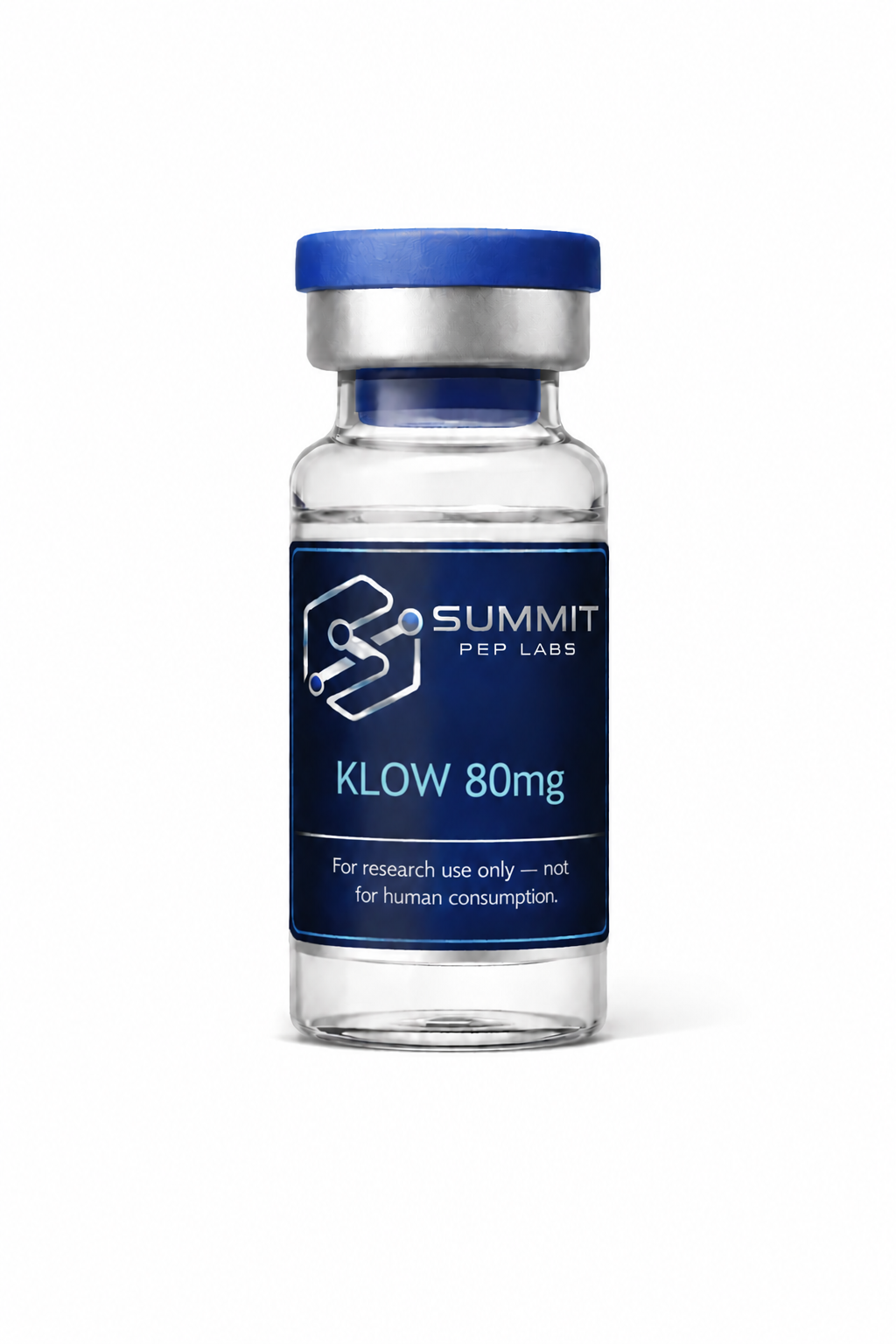
KLOW
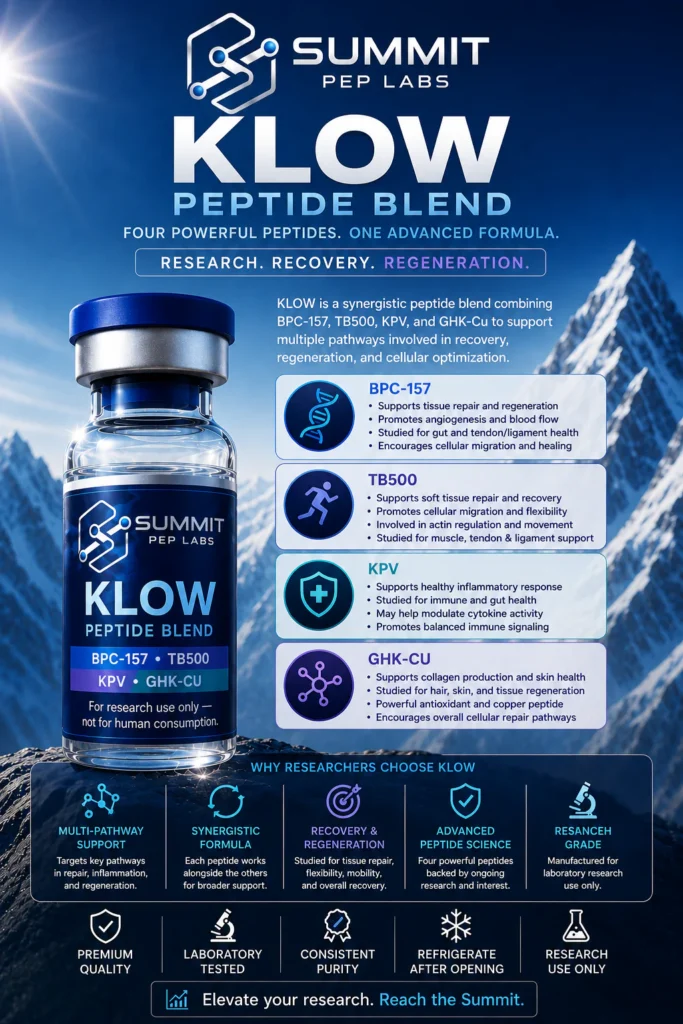
KLOW is commonly discussed as a multi-compound research blend containing:
- BPC-157
- TB500
- KPV
- GHK-Cu
Researchers are interested in this combination because each component has been studied for different cellular signaling and recovery-related pathways.
What Is the KLOW Peptide Blend?
KLOW is a multi-peptide research blend designed to combine several well-known compounds into one investigational formulation.
Researchers commonly discuss KLOW in relation to:
- tissue signaling pathways
- cellular repair research
- inflammatory response studies
- collagen support investigations
- recovery-focused peptide research
Each ingredient within KLOW contributes unique characteristics that make the blend a growing topic within regenerative peptide discussions.
BPC-157 Research Overview
BPC-157 is one of the most widely recognized peptides in recovery-focused research communities.
Researchers commonly investigate BPC-157 for its potential involvement in:
- tissue repair pathways
- angiogenesis research
- tendon and ligament signaling
- gastrointestinal pathway studies
- cellular migration processes
Because of its broad research popularity, BPC-157 is frequently included in advanced peptide blends such as KLOW.
TB500 Research Overview
TB500 is a synthetic peptide fragment related to thymosin beta-4.
Researchers continue exploring TB500 for its involvement in:
- cellular migration
- soft tissue research
- flexibility and mobility investigations
- recovery-related signaling
- actin regulation pathways
TB500 is often discussed alongside BPC-157 because researchers believe the two compounds may complement one another within tissue-focused research models.
KPV Research Overview
KPV is a peptide fragment derived from alpha-MSH (Melanocyte-Stimulating Hormone).
Researchers commonly study KPV in relation to:
- inflammatory pathway signaling
- immune response research
- gastrointestinal investigations
- cellular communication pathways
- cytokine-related studies
KPV has become increasingly popular in modern peptide research due to its potential role in inflammation-related pathways.
GHK-Cu Research Overview
GHK-Cu is a copper-binding peptide naturally found within the human body.
Researchers commonly investigate GHK-Cu for:
- collagen-related pathways
- skin appearance research
- hair follicle studies
- oxidative stress response
- regenerative signaling pathways
GHK-Cu has become especially popular within:
- cosmetic peptide research
- longevity-focused discussions
- tissue regeneration investigations
Its inclusion within KLOW helps distinguish the blend from more traditional recovery-focused peptide combinations.
Why Researchers Combine These Peptides
Researchers are increasingly interested in multi-pathway peptide formulations.
The KLOW blend combines compounds commonly discussed in relation to:
- tissue support research
- inflammatory response pathways
- collagen production studies
- recovery-focused signaling
- cellular regeneration investigations
Because each compound targets different biological pathways, researchers continue exploring whether blended formulations may offer broader investigational potential.
KLOW vs Traditional Recovery Blends
Traditional peptide combinations often focus primarily on:
- BPC-157
- TB500
KLOW expands upon this concept by adding:
- KPV
- GHK-Cu
This creates a broader multi-component research blend involving:
- tissue signaling
- inflammatory modulation research
- collagen pathways
- recovery-focused investigations
Why KLOW Is Trending in 2026
Several factors continue driving interest in KLOW peptide research:
- growing peptide awareness
- regenerative science discussions
- tissue repair research
- recovery-focused peptide communities
- increasing interest in multi-peptide blends
Researchers continue discussing KLOW within broader conversations involving:
- advanced peptide protocols
- cosmetic peptide science
- cellular recovery pathways
- longevity-related investigations
Storage and Handling Considerations
Researchers generally recommend:
- refrigeration after reconstitution
- minimizing light exposure
- sterile handling procedures
- avoiding repeated contamination exposure
Proper storage practices may help preserve peptide stability throughout research use.
Final Thoughts on KLOW Blend Research
KLOW has become a growing topic within peptide research communities because it combines four widely discussed compounds into a single investigational blend:
- BPC-157
- TB500
- KPV
- GHK-Cu
Researchers continue exploring these compounds individually and collectively in studies involving:
- tissue signaling
- inflammatory pathways
- collagen support
- regenerative biology
- recovery-focused peptide science
As peptide research continues evolving, multi-compound blends like KLOW remain an increasingly important area of scientific discussion.